AI content LLM crawlers are creating a familiar but uncomfortable problem: your content may be visible to humans, indexed by search engines, and still poorly understood by AI answer systems.
Teams think the problem is whether AI crawlers are allowed to access the site. The real problem is whether your website has a machine-readable content layer, a crawler policy, and an operational workflow for keeping both current.
That changes the conversation. This is not only an SEO task. It touches publishing, engineering, legal, analytics, and support. If the site is not clear about what can be crawled, what should be cited, what is canonical, and what is current, answer engines will make their own decisions with partial context.
The practical question is not how do we rank in AI. The practical question is how do we make our best content discoverable, understandable, attributable, and governable when LLM crawlers and AI answer engines interact with it.
Table of contents
Why AI content LLM crawlers are now an architecture problem
Search visibility is no longer only a rankings funnel
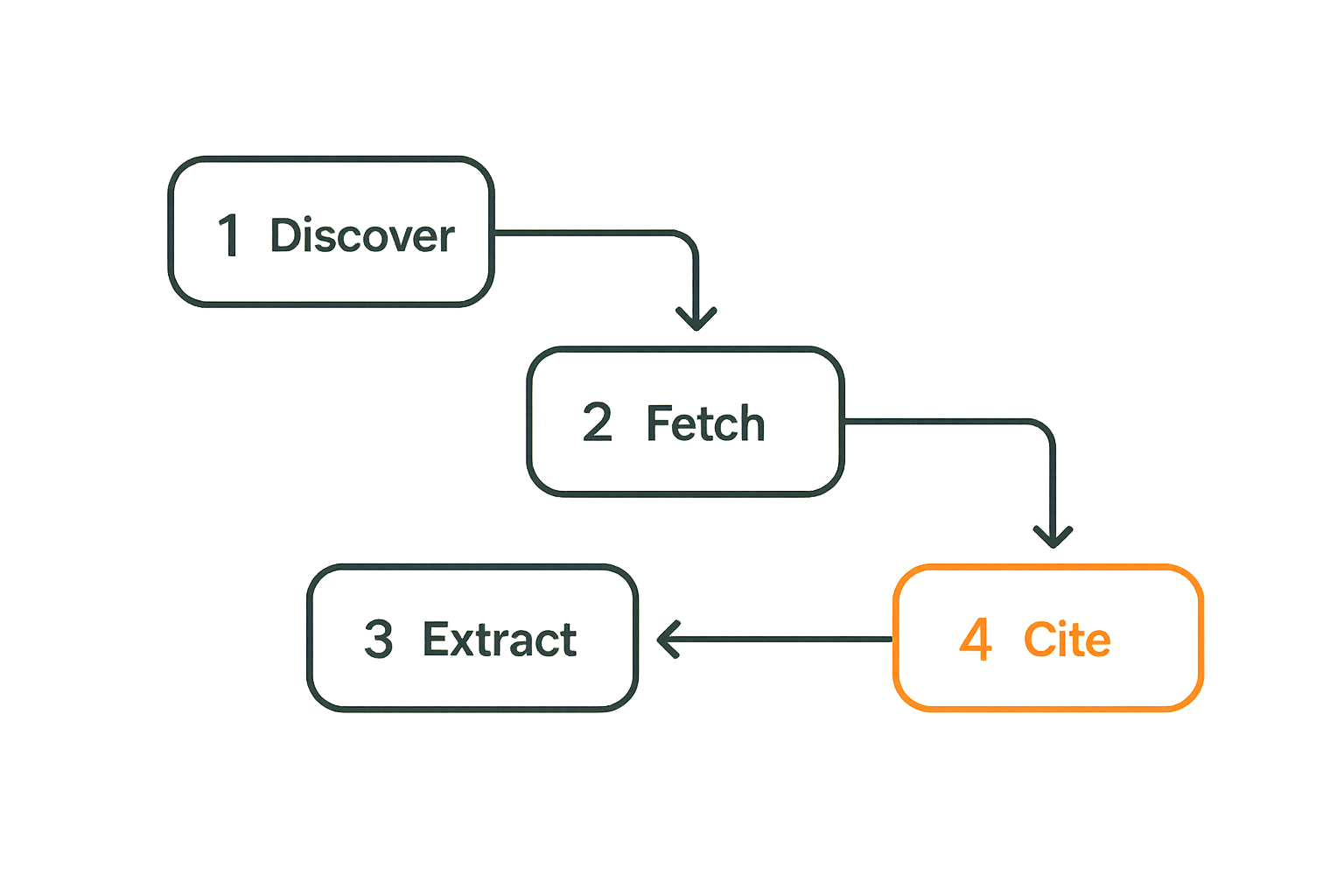
For years, website teams optimized around a relatively stable assumption: a crawler fetches a page, indexes it, the search engine shows a ranked result, and a user clicks through. That model still matters, but it is no longer the whole discovery path.
AI answer engines can summarize, compare, extract, and cite content before the user ever visits your site. Some systems show source links. Some cite inconsistently. Some use retrieval layers that may draw from search indexes, direct crawling, partner feeds, browser activity, or a combination of sources. From an operator perspective, the exact internals are less important than the result: your website is now being consumed by systems that produce answers, not just blue links.
The mistake teams make is treating this as a content formatting problem. They ask whether they should write shorter paragraphs, add FAQs, or publish more AI-generated pages. Those tactics may help around the edges. But if the site has unclear canonical pages, stale metadata, blocked resources, duplicate topic clusters, thin author signals, and no crawler monitoring, the answer engine receives a messy input.
Practical rule: If a human editor cannot quickly identify the canonical, current, citation-worthy version of an answer on your site, an AI system will struggle too.
Crawlers are consumers, not just collectors
Traditional SEO often talks about crawl budget and indexation. With AI content LLM crawlers, the more useful frame is consumption quality. What does the crawler receive? Can it parse the main content without rendering traps? Can it distinguish evergreen guidance from promotional copy? Can it tell when a page was updated? Can it extract an entity, a claim, a product, a policy, or a process without guessing?
A useful way to think about it is that your website now needs two interfaces:
- A human interface for readers, buyers, journalists, and customers.
- A machine interface for search crawlers, LLM crawlers, answer engines, and content retrieval systems.
These interfaces overlap, but they are not identical. The human interface can rely on visual hierarchy, brand context, and navigation patterns. The machine interface needs structured signals, clean HTML, crawlable text, consistent metadata, and explicit policy.
This is why AEO is not a replacement for SEO. It is an extension of technical SEO, content operations, and data governance into a new consumption layer.
How LLM crawlers discover and interpret content
Discovery paths are wider than traditional search
LLM crawlers can arrive through familiar routes: links, sitemaps, backlinks, RSS feeds, search indexes, and direct URL submission paths. But answer engines may also discover content indirectly through citations on other pages, community discussions, documentation mirrors, browser extensions, API integrations, and partner datasets.
That means your crawler readiness cannot depend on one surface. A page that is missing from the sitemap may still be found. A page blocked from one crawler may still be referenced through another index. A product doc copied into a help center may outrank the canonical guide in an AI answer because it is cleaner, more recent, or easier to parse.
What breaks in practice is not usually that the crawler never arrives. It is that the crawler arrives at the wrong version of the truth.
Common discovery problems include:
- Old URLs remain accessible after migrations.
- Printable pages or parameterized pages expose duplicate content.
- Staging or archived content is accidentally crawlable.
- Documentation, blog, and product pages contradict each other.
- PDFs contain important facts that are not mirrored in HTML.
- International versions lack clear hreflang or canonical rules.
For website owners, this means crawler discovery should be treated as an inventory problem before it becomes an optimization problem.
Interpretation depends on context, not just keywords
AI systems do not only match keywords. They try to understand entities, relationships, claims, constraints, and user intent. That sounds sophisticated, but the operational requirement is simple: reduce ambiguity.
If your page says your platform is best for growing teams, that is vague. If it says your platform supports Shopify merchants accepting stablecoin payments with webhook-based order reconciliation, that is extractable. If your article says update your schema regularly, that is generic. If it says review Organization, Article, Product, FAQPage, and BreadcrumbList schema after every template change, that is actionable.
The team at bl0ggers.com works with content teams using AI to increase output without losing editorial control, and the same principle applies here: machine-assisted publishing only works when the editorial system is explicit about facts, sources, review status, and intent.
Interpretation improves when pages include:
- Clear topic ownership in the title, H1, introduction, and internal links.
- Named entities with consistent spelling across the site.
- Dates that distinguish published, modified, and reviewed states.
- Author, reviewer, and organization signals where relevant.
- Definitions that are followed by operational detail, not just glossary text.
- Tables, lists, and steps where the answer is procedural.
The goal is not to write for robots. The goal is to remove avoidable uncertainty.
The crawler control layer: robots.txt, llms.txt, and policy
What each control is good for
AI content LLM crawlers force teams to separate access control from guidance. Those are different jobs.
Robots.txt is an access and crawling directive mechanism. It can allow or disallow user agents from fetching paths. It is useful, but it is blunt. It does not explain which pages are preferred for AI answers, what licensing expectations apply, or which content is most important.
Llms.txt is an emerging convention for giving AI systems a human-readable and machine-readable map of important content. It is not a magic ranking file. It is better understood as a guidance layer: here are the pages, docs, policies, and references we want AI systems to understand first.
Schema markup gives page-level structured context. Sitemaps expose URL inventory and freshness. Canonical tags clarify duplication. HTTP headers and meta tags can add indexing instructions. Logs show what actually happened.
Practical rule: Do not ask one file to do every job. Use robots.txt for crawl permissions, llms.txt for AI-oriented guidance, schema for meaning, and logs for verification.
A simple robots.txt policy might look like this:
User-agent: ExampleAICrawler
Allow: /blog/
Allow: /docs/
Disallow: /account/
Disallow: /checkout/

User-agent: *
Disallow: /internal-search/
Disallow: /admin/
Sitemap: https://example.com/sitemap.xml
A simple llms.txt structure might look like this:
# Example.com AI content guide

## Canonical resources
- https://example.com/docs/getting-started
- https://example.com/pricing
- https://example.com/blog/ai-crawler-policy

## Do not use as primary references
- Archived release notes before 2024
- Community forum posts without staff answers

## Content notes
Product documentation is reviewed monthly. Blog posts include review dates when materially updated.
The exact format will evolve. The workflow matters more than the syntax.
A practical policy matrix for AI crawlers
Most teams jump straight to allow or block. That is too narrow. You need a policy matrix that maps content type to business intent.
| Public evergreen guides | Allow | Encourage citation | Keep reviewed dates current |
| Product documentation | Allow | Encourage citation | Version docs clearly |
| Pricing pages | Allow | Allow with caution | Monitor for stale summaries |
| Legal policies | Allow | Allow exact reference | Avoid duplicate outdated copies |
| Customer support threads | Case by case | Usually discourage | Quality varies by thread |
| Internal search results | Block | Do not use | Low-value duplicate surface |
| Account, cart, checkout | Block | Do not use | Not public answer content |
| Old campaign landing pages | Usually block or noindex | Discourage | Retire after campaign ends |
The practical question is not whether AI crawlers are good or bad. The practical question is which content should become part of the public answer layer, and under what conditions.
Preparing content so AI systems can cite it
Make claims extractable and attributable
Answer engines tend to favor content that can be pulled into a concise answer. That does not mean every page should become a listicle. It means important claims should be easy to isolate.
Weak claim:
Our research shows many websites are not ready for AI search.
Stronger claim:
In our crawler audits, the most common AI readiness issues are unclear canonical pages, missing updated dates, JavaScript-rendered primary content, and inconsistent schema across templates.
The stronger version is more useful because it names the observed issues. If you have a source, method, date range, or limitation, include it. If you do not, avoid pretending certainty.
For pages you want cited, add a short answer block near the top. Not a spammy FAQ. A clean summary that states the page position in two to four sentences. Then support it with detail below.
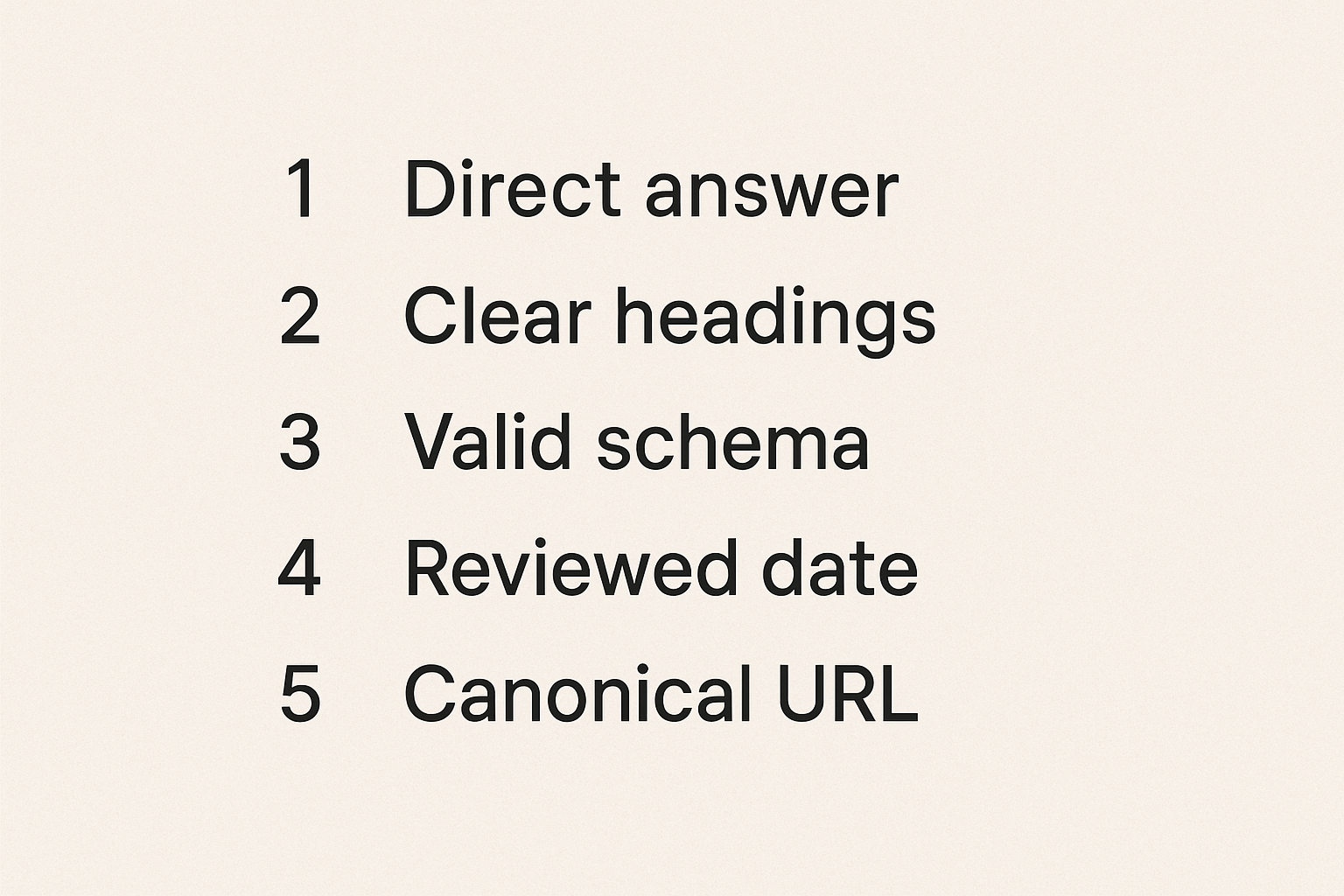
Good citation-oriented pages usually include:
- A direct answer in the introduction.
- Clear section headings that map to user questions.
- Specific examples and constraints.
- Tables for comparisons.
- Numbered steps for workflows.
- Author or organization context.
- Reviewed or updated dates.
- Internal links to supporting canonical pages.
Practical rule: If a sentence would be embarrassing when quoted out of context, rewrite it with the missing condition included.
Structure pages for answer engines, not just readers
AEO-friendly structure is not complicated. It is disciplined.
Use one clear primary topic per page. Put the main answer high on the page. Use H2 sections for decision points and H3 sections for implementation details. Keep navigation, ads, and related content from overwhelming the main body. Make sure template elements do not appear more semantically important than the article itself.
The mistake teams make is publishing many overlapping pages to capture every long-tail query. That can work in classic SEO until it creates topic fragmentation. In AI retrieval, fragmentation is dangerous because the system may select a weaker page that happens to be easier to parse.
What works:
- One strong canonical guide per important concept.
- Supporting posts that link back to the canonical guide.
- Clear publish, modified, and reviewed dates.
- Consistent terminology across all templates.
- Concise summaries followed by operational depth.
What fails:
- Thin AI-generated pages with minor keyword variations.
- Conflicting answers across blog, docs, and help center.
- Important facts hidden in images, videos, or accordions only.
- No clear author, reviewer, or organization signal.
- Pages that answer the title only after a long marketing intro.
Schema, feeds, and machine-readable context
Schema that actually helps answer engines
Schema is not a shortcut to citations, but it helps machines understand page type, entity relationships, and content attributes. For AI content LLM crawlers, schema should reinforce what the visible page already says.
Useful schema types often include:
- Organization for brand identity, logo, sameAs links, and contact points.
- WebSite for site-level identity and search actions where appropriate.
- Article or BlogPosting for editorial content.
- TechArticle for documentation and technical guides.
- Product for product pages where offers and attributes matter.
- FAQPage only when the page has genuine FAQ content visible to users.
- BreadcrumbList for hierarchy and topic context.
- Person when named authors or reviewers are meaningful.
Do not mark up content that is not visible. Do not use FAQ schema as a dumping ground for keywords. Do not leave stale schema on templates after redesigns.
A lightweight Article schema checklist:
- Headline matches the visible title.
- Description matches the real page summary.
- datePublished and dateModified are accurate.
- Author and publisher are defined.
- Main image is accessible.
- Canonical URL is consistent.
- Article body is not contradicted by metadata.
Schema should be boring. Boring is good. It means your machine-readable layer and your human-readable layer agree.
Sitemaps and feeds as freshness signals
Sitemaps are often treated as set-and-forget files. For answer engines, freshness and inventory quality matter. A sitemap full of redirected, noindexed, duplicate, or low-value URLs is a weak signal. A clean sitemap that reflects canonical content is a better map for crawlers.
Review your sitemap for:
- Only indexable canonical URLs.
- Accurate lastmod values.
- Separate sitemaps for blog, docs, products, and media when useful.
- Removal of expired campaign pages.
- Inclusion of newly updated evergreen guides.
Feeds can also help. RSS, Atom, changelogs, and documentation feeds expose updates in a predictable format. If your best content changes often, make the change stream easy to find.
The practical question is whether a crawler can answer these questions without guessing:
- What are the most important public URLs on this site?
- Which version is canonical?
- When was it last materially updated?
- What type of content is it?
- What entity, product, or topic does it describe?
If your current stack cannot answer those questions, you do not have an AEO problem yet. You have a content operations problem.
Technical accessibility: rendering, speed, and crawl reliability
What breaks with JavaScript-only content
Many modern sites are built for browsers first. That is fine until the primary content depends on client-side rendering, delayed API calls, blocked scripts, or interaction states that crawlers do not execute reliably.
What breaks in practice is simple: the crawler fetches a page and sees a shell, not the answer.
This can happen when:
- The article body loads after a client-side API call.
- Tabs or accordions hide essential content from the initial HTML.
- Documentation requires authentication or local storage state.
- Cookie banners block rendering or cover main content.
- Bot protection challenges legitimate crawlers.
- Infinite scroll exposes content without stable URLs.
Server-side rendering, static generation, or hybrid rendering usually reduces risk. The goal is not to abandon JavaScript. The goal is to make the primary content available in the initial HTML or in a crawler-accessible rendered state.
A practical test: fetch the page with a plain HTTP client and inspect the HTML. If the main answer is absent, you are relying on rendering behavior you may not control.
Logging and monitoring crawler behavior
You cannot manage AI crawler access from configuration files alone. You need logs.
At minimum, track:
- User agent.
- IP or verified crawler identity when possible.
- Requested URL.
- Status code.
- Response size.
- Response time.
- Robots decision.
- Canonical target.
- Cache status.
This lets you distinguish policy from reality. You may think a crawler is blocked, but logs show it hitting old URLs through a CDN rule. You may think docs are accessible, but logs show repeated 403 responses. You may think AI crawlers ignore your site, but they are fetching only the sitemap and failing on redirected URLs.
| Status codes | 200 for canonical public pages | 3xx chains, 403s, 5xx spikes |
| Crawl paths | Important docs and guides | Search results, parameters, archives |
| Response time | Stable enough for fetches | Timeouts on long pages |
| Content size | Similar to normal HTML output | Tiny shell responses |
| Freshness | Recrawls after updates | Old pages fetched repeatedly |
Practical rule: A crawler policy that is not checked against logs is only a document. Operations begin when you verify behavior.
A practical workflow for AI content and LLM crawler readiness
Implementation sequence for site teams
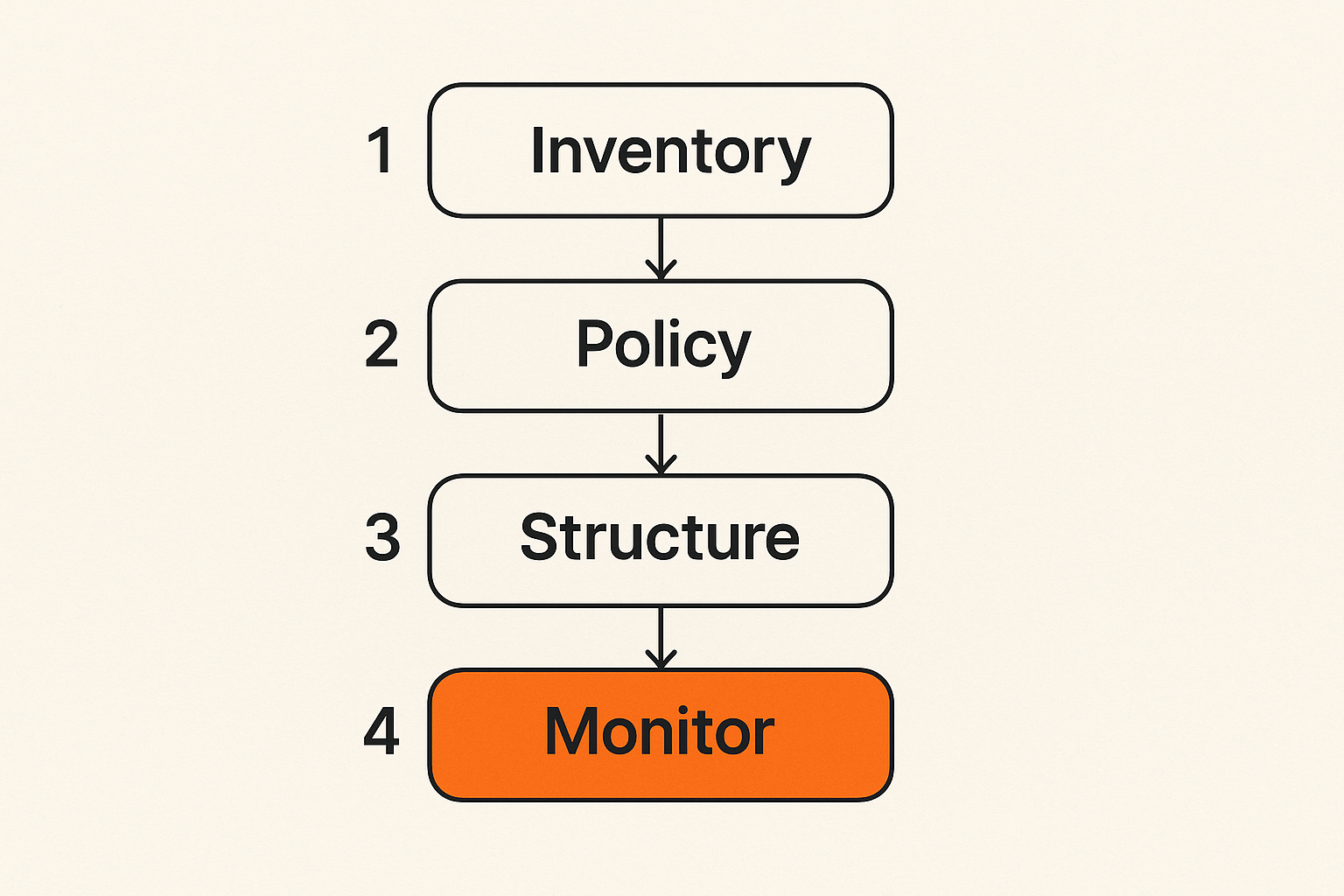
The best way to handle AI content LLM crawlers is to build a repeatable workflow. Do not start by rewriting every page. Start by identifying the content that should represent your brand in AI answers.
A practical implementation sequence:
- Inventory public content. Export URLs from the CMS, sitemap, analytics, and crawl tools. Group by type: blog, docs, product, support, legal, landing pages.
- Choose citation-worthy pages. Identify the pages you want answer engines to use as primary references for your core topics.
- Fix canonical conflicts. Consolidate duplicates, redirect retired pages, and make internal links point to preferred URLs.
- Review crawler policy. Update robots.txt, noindex rules, canonical tags, and access controls based on content type.
- Create or update llms.txt. List canonical resources, explain content boundaries, and flag pages that should not be used as primary references.
- Strengthen page structure. Add direct summaries, clean headings, schema, reviewed dates, and supporting links.
- Test technical fetchability. Validate rendered and raw HTML, status codes, speed, and blocked resources.
- Monitor crawler behavior. Use logs and AEO monitoring to see which crawlers visit which pages and where failures appear.
- Review after publishing changes. Every new template, migration, or content program should trigger an AI crawler readiness check.
This sequence is intentionally operational. It gives content, SEO, and engineering teams a shared checklist instead of a vague mandate to optimize for AI.
Ownership model across content, SEO, and engineering
AEO fails when nobody owns the full path. Content teams own the words but not the templates. Engineers own rendering but not editorial priorities. SEO teams own metadata but not product truth. Legal owns policy but not logs.
You need named ownership by layer:
- Content owns accuracy, structure, review cadence, and canonical topic coverage.
- SEO owns discoverability, internal linking, metadata, schema QA, and indexation logic.
- Engineering owns rendering, performance, status codes, bot handling, and deployment safeguards.
- Legal or leadership owns crawler permissions, licensing posture, and risk tolerance.
- Analytics owns measurement, logs, dashboards, and investigation support.
The useful meeting is not a brainstorm about AI search trends. It is a monthly review of the crawler map, the citation-worthy page list, the logs, and the pages that changed.
That changes the conversation from speculation to operations.
What fails when teams optimize for AI crawlers badly
Blocking without strategy creates blind spots
Some site owners respond to AI crawlers by blocking everything. That may be the right decision for certain business models, especially where content licensing is the product. But many teams block first and think later.
Blanket blocking can create problems:
- Your public expertise may be absent from answer engines.
- Competitors or low-quality third-party summaries may fill the gap.
- AI systems may still infer information from other sources.
- You lose visibility into which crawlers wanted which pages.
- Internal teams assume the issue is solved when it is only hidden.
The opposite mistake is allowing everything. That exposes low-quality archives, support fragments, outdated pages, and thin programmatic content to systems that may not understand your preferred hierarchy.
The practical answer is not always allow. It is intentional exposure.
Ask for each content class:
- Is this page public and accurate?
- Would we be comfortable if this page were cited?
- Is there a better canonical page for the same answer?
- Is the page current enough for AI summaries?
- Does the page create legal, privacy, or support risk?
Publishing AI content without governance weakens trust
AI-generated or AI-assisted content can be useful. It can also create a messy answer layer if teams prioritize volume over editorial control.
Common failure modes include:
- Multiple articles answer the same question with slight differences.
- AI drafts introduce unsupported claims or outdated assumptions.
- Editors check grammar but not factual accuracy.
- Schema marks generated content as authoritative without review.
- Pages are published faster than they can be maintained.
- Internal links point to weak pages instead of canonical guides.
For AEO, content quality is not only about human satisfaction. It affects retrieval quality. A site full of overlapping, low-confidence pages makes it harder for AI systems to identify the source of truth.
What works is an editorial gate for AI-assisted publishing:
- Define the intended query or user task.
- Check for an existing canonical page before creating a new one.
- Require source notes for factual claims.
- Add human review for expertise-sensitive topics.
- Assign a review date before publication.
- Link new supporting content back to the canonical guide.
AI can help production. It should not remove ownership.
Measurement: what to track when citations are opaque
Leading indicators you can actually observe
AI answer visibility is harder to measure than classic rankings. Citations vary by user, prompt, location, model, retrieval source, and time. You will not get a clean analytics report for every AI mention.
That does not mean you are blind. Track leading indicators that show whether your machine interface is improving.
Useful indicators include:
- Number of citation-worthy pages with updated summaries.
- Percentage of key pages with valid schema.
- Sitemap accuracy and lastmod reliability.
- Raw HTML availability of primary content.
- Crawler hits to important public pages.
- Crawl errors by AI user agent.
- Presence of your pages in answer engine citations for test prompts.
- Reduction in duplicate or conflicting pages.
- Internal search queries that reveal missing canonical answers.
Do not overfit to one prompt test. Prompt outputs move. Instead, maintain a panel of representative questions and check whether your preferred pages appear, whether competitors appear, and whether the answer reflects current information.
An investigation workflow for missing citations
When your site is not cited for a query where it should be, avoid guessing. Investigate the path.
Use this workflow:
- Check the content. Does a clear, current, citation-worthy page exist?
- Check uniqueness. Is that page better than your own duplicates and competitor pages?
- Check accessibility. Can crawlers fetch the main content in raw or rendered HTML?
- Check controls. Are robots.txt, meta robots, canonical tags, and headers aligned?
- Check structure. Does the page answer the query directly near the top?
- Check schema. Does structured data reinforce the visible content?
- Check freshness. Is the page updated, linked, and included in sitemaps?
- Check logs. Have relevant crawlers requested the page? What happened?
- Check external context. Are other sites citing, summarizing, or contradicting you?
This workflow turns missing citations into a debugging exercise. That is the right model. AI visibility is noisy, but many root causes are ordinary technical and editorial issues.
Where CrawlProof fits in your AEO stack
Product-fit architecture, not another dashboard
Most teams do not need another place to stare at vanity metrics. They need a way to understand how AI crawlers interact with their site, which pages are ready for answer engines, and where the content architecture is sending mixed signals.
CrawlProof fits into the AEO stack as an operational layer between your website and the AI discovery ecosystem. The useful job is not to promise that every answer engine will cite you. Nobody can honestly guarantee that. The useful job is to help you see and improve the signals you control:
- Which crawlers are accessing your content.
- Whether important pages are technically reachable.
- Where schema, metadata, and canonical signals are weak.
- Whether llms.txt and crawler policies reflect your actual content strategy.
- Which pages should be strengthened as primary AI references.
- Where answer engine optimization work belongs in the publishing workflow.
That is the right level of abstraction. AEO is not magic. It is content architecture, crawler observability, and publishing governance applied to AI answer systems.
Closing the loop on AI content LLM crawlers
AI content LLM crawlers are not a temporary SEO trend. They are another class of consumer for your public website. Some will follow your instructions carefully. Some may not. Some will cite. Some will summarize without sending much traffic. The only sane response is to control what you can control.
Make your canonical content obvious. Keep machine-readable signals aligned with the visible page. Use robots.txt and llms.txt for the jobs they are suited to. Monitor crawler behavior instead of assuming configuration equals reality. Build an editorial workflow that prevents AI-assisted publishing from polluting your own source of truth.
The teams that win will not be the ones chasing every new crawler name. They will be the teams that treat AI content LLM crawlers as an architecture and operations problem.
Try crawlproof.com
If AI content LLM crawlers now touch your visibility, your content strategy needs crawler intelligence built in. Try crawlproof.com to understand AI crawler behavior, AEO readiness, schema gaps, and emerging standards like llms.txt.