Your best article may be invisible to AI answer engines because the path to it is weak.
That is the uncomfortable part of answer engine optimization in 2026. It is not enough to publish useful content, add a few FAQ blocks, and hope ChatGPT, Perplexity, Claude, Gemini, or another answer layer decides to cite you. Discovery is increasingly path-based. Crawlers follow signals. Answer systems compress context. Citation candidates compete inside a messy retrieval pipeline.
Teams think the problem is content quality. The real problem is reinforced discoverability.
That is where ant colony optimization algorithms become useful for website owners, SEO professionals, content strategists, and developers. Not because you need to run a swarm intelligence model on your blog tomorrow. The practical value is architectural: ant colony optimization gives you a way to think about how small routing signals compound across a site until some pages become obvious answer candidates and others become dead ends.
If you already understand traditional SEO, a useful bridge is this: AEO changes the unit of optimization from ranking pages to shaping answer paths. If that distinction is still fuzzy, our primer on what AEO is and why it is not just SEO is the right baseline before you redesign your content architecture.
The practical question is not, can ant colony optimization algorithms improve my SEO? The better question is, what would my website look like if every crawler, parser, retrieval system, and answer engine could repeatedly find the strongest path to my most citable content?
Table of contents
Why ant colony optimization algorithms matter to AEO now
The crawl path problem
Search teams have spent years optimizing individual pages. Title tag. H1. Canonical. Body copy. Internal links. Structured data. Those still matter, but answer engines add another layer: they need to retrieve, summarize, trust, and cite content inside a generated response.
That changes the conversation.
A page is not just a page anymore. It is a node in a larger discovery system. If the node is isolated, buried, duplicated, stale, blocked, or semantically unclear, it may never become part of the answer set even if the prose is good.
Ant colony optimization algorithms were designed to solve routing problems through collective path selection. Ants explore possible paths. Shorter or better paths receive more pheromone. Over time, the colony converges toward efficient routes. In AEO, your pages, links, schema, sitemaps, llms.txt files, summaries, and canonical structures behave like routing signals.
The mistake teams make is treating AEO as a copywriting checklist. The real operational problem is whether your site produces reinforced paths toward the pages you want answer engines to understand and cite.
Practical rule: If an important answer page is more than a few weak clicks away from its supporting context, assume an AI crawler may treat it as less important than you do.
From rankings to cited routes
Classic SEO asks, can this URL rank for this query? AEO asks a different question: can an answer engine identify this content as a reliable source for a specific answer task?
That task might include:
- discovering the page through crawl rules or links;
- extracting the main entity and claim;
- matching the content to a user question;
- checking whether related pages support or contradict it;
- deciding whether the source is specific enough to cite.
This is closer to routing than publishing. A crawler may arrive through your homepage, sitemap, XML feed, internal hub, documentation page, or external citation. Each path carries different context. A product page discovered from a thin navigation menu may look weaker than the same product page discovered through a detailed comparison guide, schema graph, and fresh supporting article.
Related reading from our network: teams building private communication systems face a similar routing problem around trust boundaries and metadata exposure in secure messaging app architecture. Different niche, same lesson: the path matters as much as the object.
Do not take the ant metaphor too literally. AI answer engines are not ants. They do not leave real pheromones on your URLs. Their retrieval systems are proprietary, shifting, and unevenly documented.
But the metaphor is useful because it forces operators to ask better questions:
- Which routes lead machines to our strongest content?
- Which routes are noisy, stale, or misleading?
- Which pages receive reinforcement from links, schema, freshness, and topical consistency?
- Which important pages are technically accessible but operationally invisible?
A useful way to think about it is this: ant colony optimization algorithms give you a mental model for cumulative signal design. You are not optimizing one page. You are optimizing the routes that make a page repeatedly discoverable, interpretable, and citable.
Think of answer visibility as path reinforcement
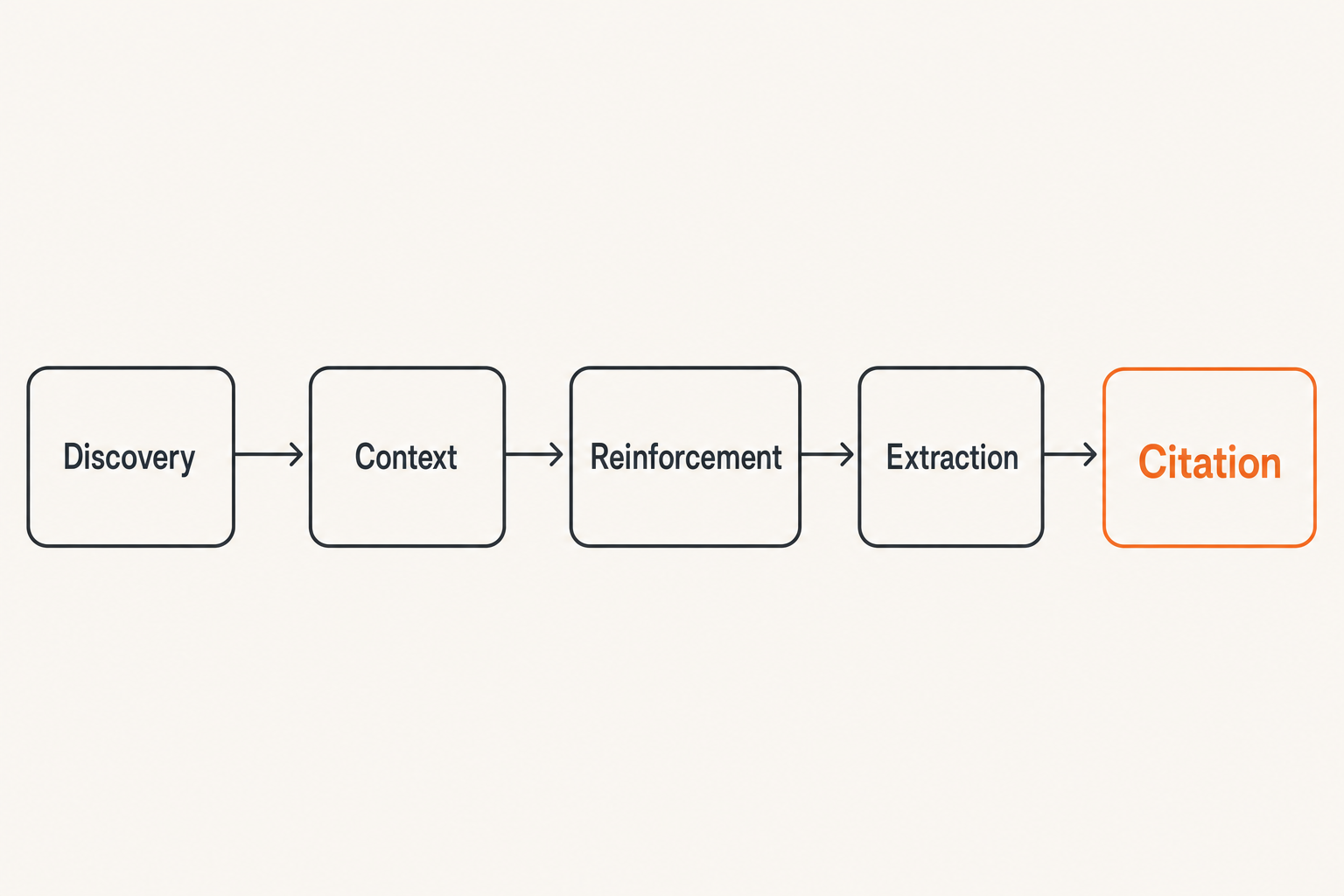
Pheromones become machine-readable signals
In nature, pheromones are trail markers. On a website, the equivalent is not one signal. It is the combination of crawlable evidence that points machines toward a conclusion.
For AEO, reinforcement signals include:
- descriptive internal links;
- HTML that renders without fragile client-side dependencies;
- schema markup that matches visible content;
- clean canonical tags;
- updated sitemaps;
- accessible robots policies;
- llms.txt guidance where relevant;
- concise summaries and definitions;
- entity-consistent headings and page titles;
- external references or citations where legitimate.
No single signal guarantees citation. But repeated alignment makes a path easier to follow. If your internal links call a topic one thing, your headings call it another, your schema omits it, and your summary buries the answer, you are asking a machine to infer what you should have made explicit.
Practical rule: Reinforcement is not repetition. Repeating the same keyword everywhere is noise. Aligning links, schema, headings, summaries, and supporting pages around the same entity is reinforcement.
Evaporation looks like stale context
In ant colony optimization, pheromone trails evaporate. That prevents the colony from getting stuck on old paths when better paths emerge.
Websites have their own version of evaporation. Content gets stale. Internal links point to old versions. Schema reflects a previous product model. Blog posts mention features that no longer exist. The sitemap includes pages nobody maintains. Answer engines may not know which page represents the current truth.
What breaks in practice is that teams publish new content without retiring or redirecting old trails. They create five semi-overlapping guides, then wonder why AI systems summarize the wrong one.
Freshness is not just a date stamp. It is the visible maintenance of the route:
- updated facts;
- clear last-modified metadata;
- canonical consolidation;
- links from older pages to newer authoritative pages;
- removal of obsolete claims;
- stable URLs for evergreen references.
The practical question is not, did we update the article? It is, did we update the path that leads machines to the current answer?
Shortest path is not always the best path
Ant colony optimization often rewards efficient paths, but in AEO the shortest route is not always strongest. A homepage link to a technical answer page is useful, but it may not provide enough context. A hub page, glossary entry, and implementation guide may form a better route because they explain why the destination matters.
For answer engines, the best path is usually the most context-rich path that remains crawlable and unambiguous.
That means your architecture should support both:
- direct discovery for important pages;
- contextual discovery through related pages.
A page about pricing, for example, should be reachable directly from navigation. But it should also be linked from comparison pages, integration docs, buyer guides, and support content when those pages clarify the commercial context.
Map your website as a crawlable knowledge graph
Start with entities not URLs
Most teams start an AEO project with a spreadsheet of URLs. That is understandable, but it is not enough. Answer engines reason around entities, relationships, and claims. URLs are containers.
Start with the entities you want machines to associate with your site:
- your brand;
- your product category;
- the problems you solve;
- the audience you serve;
- key technical concepts;
- competitor or alternative categories where appropriate;
- standards, protocols, or frameworks you support.
Then map which pages define, support, compare, or validate each entity. You may discover that your most important topic is scattered across ten pages with no single authoritative destination. Or you may find that your definitive guide exists but receives no meaningful internal reinforcement.
This is where ant colony optimization algorithms become more than a metaphor. They push you to model the site as a network of paths, not a pile of assets.
Connect supporting pages to answer pages
An answer page is the page you want cited for a question. A supporting page is anything that helps an answer engine trust, interpret, or route to that answer page.
Examples:
| Glossary page | Defines the entity | No links to deeper implementation pages |
| Comparison page | Clarifies tradeoffs | Links only to conversion pages |
| Documentation | Provides operational proof | Hidden behind app-only navigation |
| Blog post | Explains use cases | Ends without routing to authoritative pages |
| Case study | Adds evidence | Uses vague language and no schema |
| Product page | Commercial destination | Lacks technical context for answer extraction |
The mistake teams make is linking everything to the highest-converting page and starving the most informative page. For AEO, the most citable page is often not the most sales-oriented page. It is the page that gives the answer engine a clean, specific, extractable explanation.
Related reading from our network: product teams selling downloadable assets run into the same route design issue between landing pages, checkout, delivery, and support; see how to sell digital products without building a fragile launch machine.
Make schema carry routing intent
Schema should not be decorative. It should clarify what the page is, who it is for, and how it relates to other site assets.
For AEO, useful schema patterns often include:
- Organization for brand identity;
- Article or BlogPosting for editorial pages;
- Product or SoftwareApplication for product pages;
- FAQPage only when visible FAQs actually exist;
- BreadcrumbList for hierarchy;
- Person where author expertise matters;
- sameAs links where external profiles are legitimate;
- about and mentions fields when they accurately reflect the topic.
If you are experimenting with crawler guidance files, our explainer on llms.txt and skill.md covers what these files are trying to solve and where they fit beside existing robots and sitemap practices.
A simple AEO routing snippet might look like this conceptually:
<script type=application/ld+json>
{
  @context: https://schema.org,
  @type: Article,
  headline: AEO Audit Checklist for SaaS Websites,
  about: Answer Engine Optimization,
  mentions: [LLM crawlers, schema markup, llms.txt],
  isPartOf: https://example.com/aeo-guides,
  dateModified: 2026-07-16
}
</script>
In production, valid JSON-LD requires proper quoting. The point here is architectural: schema should reinforce the same route your visible page and internal links already describe.
Use ant colony optimization algorithms as an audit lens not a magic model
What you can borrow safely
You do not need a PhD-level implementation to use ant colony optimization algorithms in AEO planning. Borrow the operating principles:
- Exploration matters. Crawlers need multiple clean ways to discover important pages.
- Reinforcement matters. Strong pages should receive repeated, consistent signals.
- Decay matters. Old paths should be reduced when they point to stale information.
- Network structure matters. Isolated pages underperform even when written well.
- Feedback loops matter. You need to measure what machines can actually see.
This gives content and engineering teams a shared language. Content owns the entities, claims, summaries, and editorial freshness. Engineering owns crawlability, rendering, schema deployment, redirects, and logs. SEO owns the connective tissue.
Practical rule: Use ant colony optimization as a planning model before you use it as a software model. Most sites need cleaner routes, not a custom algorithm.
What you should not over-engineer
The hype version of this topic says you can run swarm intelligence over your site and automatically produce an optimal internal linking structure. Maybe one day that is useful for some large sites. For most teams, it is premature.
What fails is automating links without understanding intent. You get pages linked together because embeddings are similar, not because the route helps a crawler or reader answer a question. You get hub pages that look mathematically dense but editorially useless. You get keyword anchors that feel mechanical.
Avoid automating decisions you have not first made explicit:
- Which pages are authoritative answer destinations?
- Which entities matter commercially and editorially?
- Which older pages should decay or redirect?
- Which crawl rules apply to AI bots versus traditional search bots?
- Which content is allowed to be summarized by answer engines?
If you cannot answer those manually, software will just scale the confusion.
A simple comparison for AEO teams
| Page checklist SEO | Individual URL hygiene | Fast fixes, basic compliance | Misses route strength and entity context |
| Automated internal linking | Link volume and topical similarity | Useful for large archives with governance | Creates noisy trails without editorial intent |
| ACO-inspired AEO architecture | Reinforced crawl and citation paths | Aligns links, schema, freshness, and answer pages | Requires ownership across teams |
The practical option is usually the third column, not the most complex one. Use the algorithmic model to expose weak paths. Then make human decisions about which paths deserve reinforcement.
Build the workflow from signals to decisions
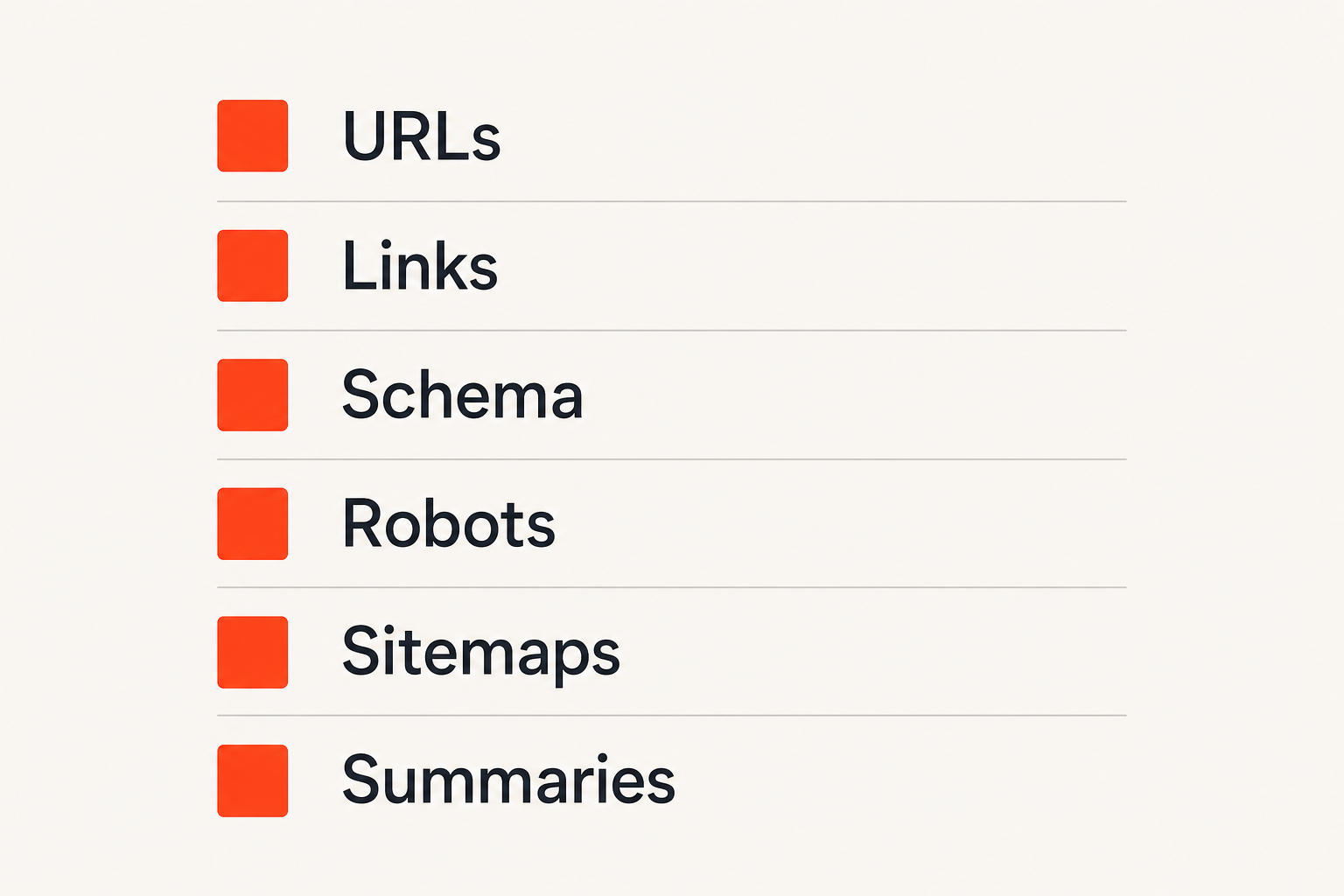
Before you change anything, collect what an AI crawler or answer engine can plausibly observe. Do not rely only on your CMS preview or your SEO plugin dashboard.
A practical collection pass includes:
- Crawl the site as a basic bot with JavaScript disabled and enabled.
- Export all indexable URLs, canonicals, status codes, titles, headings, and internal links.
- Extract schema types and validate whether markup matches visible content.
- Review robots.txt, meta robots, X-Robots-Tag headers, and AI-bot access rules.
- Check sitemap freshness and lastmod values.
- Identify pages blocked by authentication, scripts, consent gates, or broken rendering.
- Capture key summaries, definitions, and answer-style sections.
This is the AEO version of seeing the trail map. You cannot reinforce a path you have not mapped.
Step two score reinforcement signals
Once you have the inputs, score each important entity or answer page by route strength. Keep the model simple enough that teams will use it.
Example scoring categories:
- Discoverability: can crawlers reach the page from multiple stable paths?
- Context: do surrounding pages explain why the destination matters?
- Consistency: do titles, anchors, headings, and schema use aligned language?
- Freshness: is the current answer visibly maintained?
- Extractability: can a machine isolate the answer without parsing clutter?
- Authority: does the site clearly show why it is a credible source?
You can score each category from 0 to 3. The numbers are not magic. They force a conversation.
A page with strong content but weak discoverability is not a writing problem. A page with good links but contradictory schema is not an editorial problem. A page with outdated support articles is a maintenance problem.
That changes the conversation from, we need more content, to, we need stronger routes to the right content.
Step three change the site and validate
After scoring, make changes in small batches. AEO work breaks when teams ship too many structural changes at once and cannot tell what improved or regressed.
A sane implementation sequence:
- Pick one entity cluster, not the whole site.
- Choose one authoritative answer page for that cluster.
- Update supporting pages to link to it with descriptive anchors.
- Add or fix schema that reflects the visible content.
- Consolidate stale overlapping pages with redirects or canonical updates.
- Add a concise summary section near the top of the answer page.
- Re-crawl the cluster as a bot.
- Test whether the answer can be extracted from the rendered HTML.
- Repeat for the next cluster.
This is slow compared with publishing ten AI-written posts. It is also how durable AEO work gets done.
What works when applying swarm logic to content architecture
Create deliberate hubs
Hubs are not category pages with a list of links. A useful AEO hub defines the topic, explains subtopics, routes to authoritative pages, and stays maintained.
A strong hub usually includes:
- a clear definition of the entity;
- links to beginner, technical, comparison, and implementation pages;
- visible last updated information;
- short summaries of each linked resource;
- schema that matches the page type;
- a stable URL that does not change with campaigns.
The hub becomes a high-signal junction. It is not the final answer for every query. It is the place where machines and humans can understand the map.
The mistake teams make is building hubs for every keyword variation. That fragments the trail. Build hubs around entities and workflows, not around every possible phrase.
Use summaries as routing surfaces
Answer engines need extractable text. If your page opens with brand positioning, internal jargon, and a long story before saying what the page is about, you are making extraction harder.
This does not mean every article should start with a bland definition. It means important pages should contain clear routing surfaces:
- a short answer block;
- a who-this-is-for section;
- a what-this-solves section;
- a table comparing options;
- implementation steps;
- explicit limitations;
- links to deeper supporting pages.
These surfaces help answer systems identify whether the page is relevant to a query. They also help human readers. That is the point. AEO and usability often converge when you remove ambiguity.
Keep freshness visible
Freshness needs to be machine-readable and editorially honest. Do not change dates just to look current. Update the substance and expose the update.
Good freshness signals include:
- dateModified in schema;
- visible last updated text;
- changelog sections for technical docs;
- updated screenshots where UI matters;
- clear version notes for standards or APIs;
- redirects from obsolete versions;
- internal links from old explainers to current guidance.
Related reading from our network: finance teams face a comparable problem when old spreadsheet processes keep influencing decisions after the workflow has changed; this guide to budgeting software workflow selection is a useful adjacent example of choosing systems around operational reality instead of surface features.
What fails in production and why
Thin internal links create false trails
Internal links are only useful when they carry meaning. A footer link to every service page is not the same as a contextual link from a relevant guide. A generic anchor like learn more tells machines and readers very little.
Thin links create false trails. They technically connect pages, but they do not explain why the destination matters. In an ACO-inspired model, they are weak pheromones spread everywhere. The colony does not converge because every route looks equally vague.
What works:
- descriptive anchors;
- links from contextually related pages;
- fewer, stronger links in key sections;
- hub pages that explain the route;
- links from old high-traffic pages to current authoritative pages.
What fails:
- sitewide blocks stuffed with links;
- automated anchors based only on keyword matching;
- links to conversion pages when an explanatory page is more useful;
- orphaned content promoted only through social posts;
- internal links hidden behind accordions or scripts crawlers may not execute reliably.
JavaScript hides the pheromone trail
Modern sites often render important content client-side. That is not automatically bad. But it is risky when the crawler-visible HTML is empty, incomplete, or delayed.
AI crawlers vary in how they fetch, render, and process pages. Some may execute JavaScript. Some may not. Some may use cached search indexes rather than direct live crawling. Some may have timeouts that drop late-rendered content.
If your internal links, summaries, schema, or main content appear only after a heavy script chain, you have made the trail fragile.
A practical developer checklist:
- server-render important content where possible;
- include critical internal links in HTML;
- validate rendered and raw HTML separately;
- avoid injecting schema only after user interaction;
- test pages with simple bots, not just browsers;
- monitor status codes and redirect chains;
- keep important content out of tabs that require events to load.
Practical rule: If the raw HTML gives no useful clue about the page, assume some AI discovery systems will miss or misread it.
Conflicting robots and AI crawler rules break trust
Robots policies are becoming more complicated. Sites now think about Googlebot, Bingbot, GPTBot, ClaudeBot, PerplexityBot, Google-Extended, Common Crawl, and other agents. On top of that, teams experiment with llms.txt, paywalls, consent tools, and CDN-level bot controls.
What breaks in practice is policy drift. Marketing wants answer engines to cite the blog. Legal blocks broad AI crawlers. Engineering adds a CDN rule to reduce scraping. The CMS adds noindex to a template. Nobody owns the final behavior.
The result is a site that says yes in one place and no in another.
For AEO, crawler access should be an explicit business decision:
- Which content should AI systems be allowed to crawl?
- Which content should not be used for model training or summaries?
- Which bots do you treat differently?
- Which pages should be discoverable but not indexed?
- Who approves changes to robots rules?
Without ownership, your carefully reinforced paths can disappear at the infrastructure layer.
Metrics that show whether the path is getting stronger
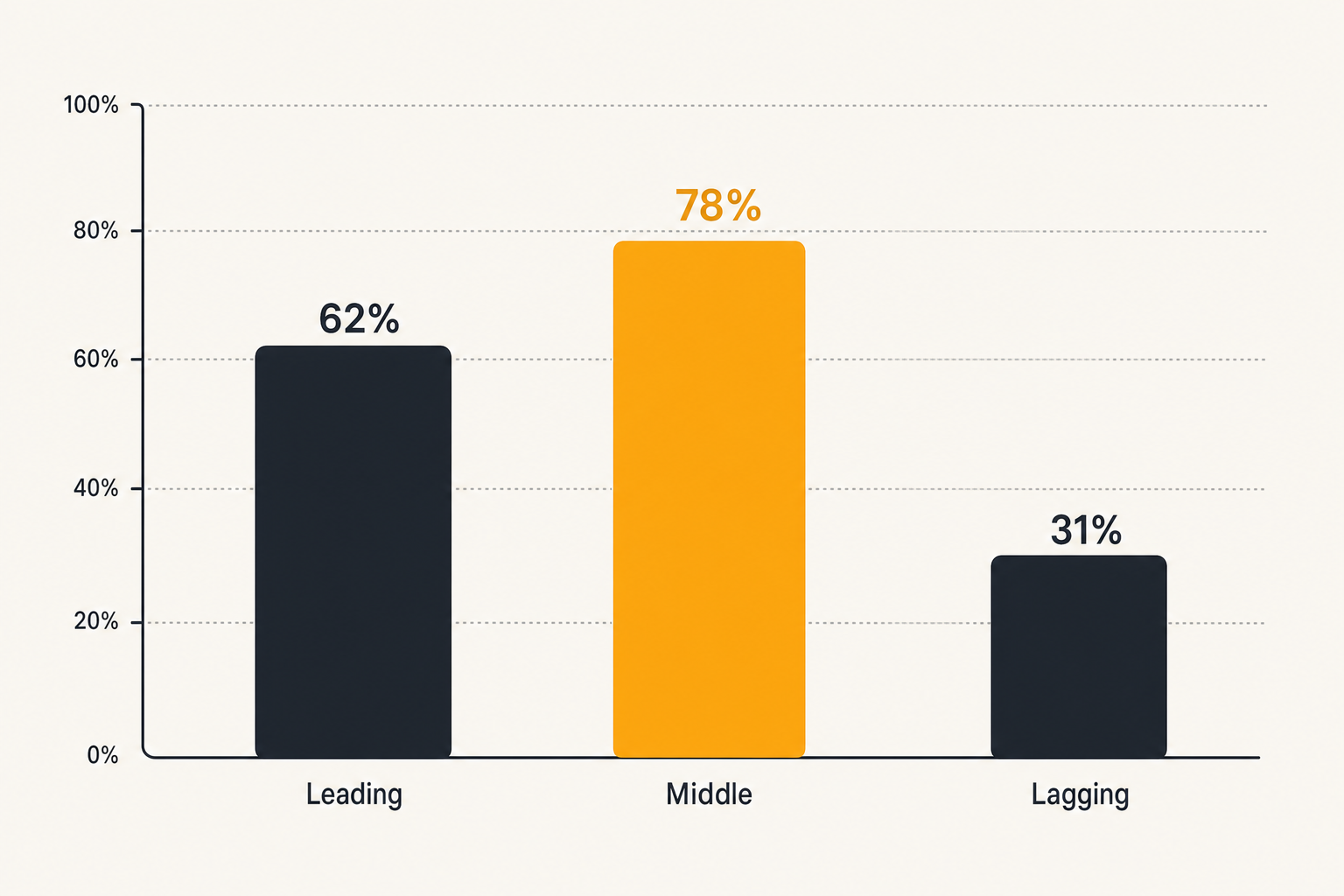
Measure crawl accessibility before citation outcomes
Citation tracking is useful, but it is a lagging indicator. If you only measure whether an answer engine cites you today, you miss the upstream failures.
Measure crawl accessibility first:
- percentage of priority pages reachable in a bot crawl;
- percentage with valid canonical tags;
- percentage with visible summaries;
- percentage with schema matching visible content;
- number of orphaned priority pages;
- number of blocked or ambiguous AI crawler paths;
- average click depth from hubs to answer pages.
These are not vanity metrics. They tell you whether the route exists. If the route does not exist, citation performance is mostly hope.
Track entity coverage and answer extraction
Next, test whether machines can extract the right answer. You can do this manually for a small site or automate it for a larger one.
For each entity cluster, ask:
- Is there one clear page that defines the entity?
- Does the page answer common questions directly?
- Are claims supported by nearby context?
- Does the page distinguish itself from adjacent concepts?
- Can the answer be extracted without navigation, ads, or unrelated boilerplate?
- Do supporting pages route back to the authority page?
This is where many content programs discover duplication. They have plenty of pages, but no authoritative answer. Ant colony optimization algorithms would see this as a network that has not converged. Crawlers see it as ambiguity.
Separate leading indicators from lagging indicators
AEO reporting should separate route health from market outcomes.
| Leading indicators | crawl access, schema validity, summary extraction, hub links | Shows whether answer engines can understand the path |
| Middle indicators | impressions in AI search surfaces, bot hits, query mentions, citation tests | Shows whether systems are interacting with the content |
| Lagging indicators | referred visits, assisted conversions, brand mentions, sales conversations | Shows business impact after discovery occurs |
The mistake teams make is demanding lagging proof before fixing leading failures. That is like asking why ants have not reached the food while the trail is blocked.
Make ant colony optimization algorithms useful for AEO operations
Assign ownership across content and engineering
Ant colony optimization algorithms are useful here because they expose AEO as a systems problem. No single team owns the whole trail.
A practical ownership model looks like this:
- Content owns entity clarity, answer quality, summaries, and freshness.
- SEO owns internal linking strategy, canonical decisions, crawl analysis, and cluster priorities.
- Engineering owns rendering, schema deployment, logs, redirects, and bot access controls.
- Product marketing owns positioning, comparison pages, and commercially important narratives.
- Legal or leadership owns policy decisions around AI crawler access and reuse.
The workflow should not be a quarterly audit that produces a forgotten spreadsheet. It should be a recurring operating loop:
- Choose priority entity clusters.
- Audit crawler-visible paths.
- Identify weak reinforcement points.
- Ship content and technical fixes.
- Validate with bot-style crawling and extraction tests.
- Monitor leading and lagging indicators.
- Retire stale trails.
This is how the metaphor becomes useful. You are not pretending your site is an ant colony. You are using the idea of path reinforcement to make better operational decisions.
Where CrawlProof fits
CrawlProof is built for the part of AEO that teams usually under-measure: what AI crawlers and answer engines can actually find on a page. That includes content visibility, schema, robots rules, AI-bot access, and positioning signals.
The product fit is architectural, not magical. If your team is using an ACO-inspired model, you need evidence about the trail. Which pages are visible? Which signals are missing? Which policies conflict? Which answer surfaces are too weak for extraction?
That is the gap CrawlProof focuses on. It helps site owners and marketers see whether their intended answer paths are visible to AI systems before they spend another month publishing content into a broken route.
Use ant colony optimization algorithms as the planning model. Use crawler-visible audits as the validation layer. The closing point is simple: better AEO comes from reinforced paths, not louder pages.
Try crawlproof.com
CrawlProof helps site owners and marketers understand how AI answer engines and LLM crawlers discover, parse, and cite their content. Try crawlproof.com to see your site the way AI crawlers do.