

If you've been watching your organic traffic hold steady while referral traffic from AI sources flatlines, you've probably already noticed that something structural changed. It wasn't an algorithm update. It was the architecture of how AI systems consume the web.
Manus AI — the autonomous agentic assistant that browses, plans, and executes multi-step tasks on the open web — is one of the clearest examples of that shift. Teams think the problem is "my content isn't being found by ChatGPT." The real problem is that an entirely new class of AI agent is now traversing your site, evaluating it against task-specific criteria you didn't design for, and either citing you or ignoring you — with no ranking page in between.
That changes the conversation about optimization. Traditional SEO is about appearing in a list. Answer engine optimization is about being the source a model reaches for when it needs a definitive answer. Manus AI takes that further: it's about whether an autonomous agent decides your page is worth reading, extracting, and using as the basis for a response it will deliver to a user who may never see your URL at all.
This article breaks down what Manus AI is architecturally, how agentic AI crawlers differ from traditional search crawlers and even from first-generation LLM indexers, and what practical steps site owners, SEO professionals, and content strategists should take right now.
Table of Contents
- What Manus AI Actually Is (And Isn't)
- How Agentic AI Crawling Differs From LLM Indexing
- Why Standard SEO Signals Don't Transfer
- What Manus AI and Similar Agents Look For on a Page
- Common Failure Modes: What Breaks in Practice
- The AEO Architecture Changes Manus AI Forces
- Implementation Sequence: Auditing and Adapting for Agentic Visibility
- How CrawlProof Fits Into This Workflow
What Manus AI Actually Is (And Isn't)
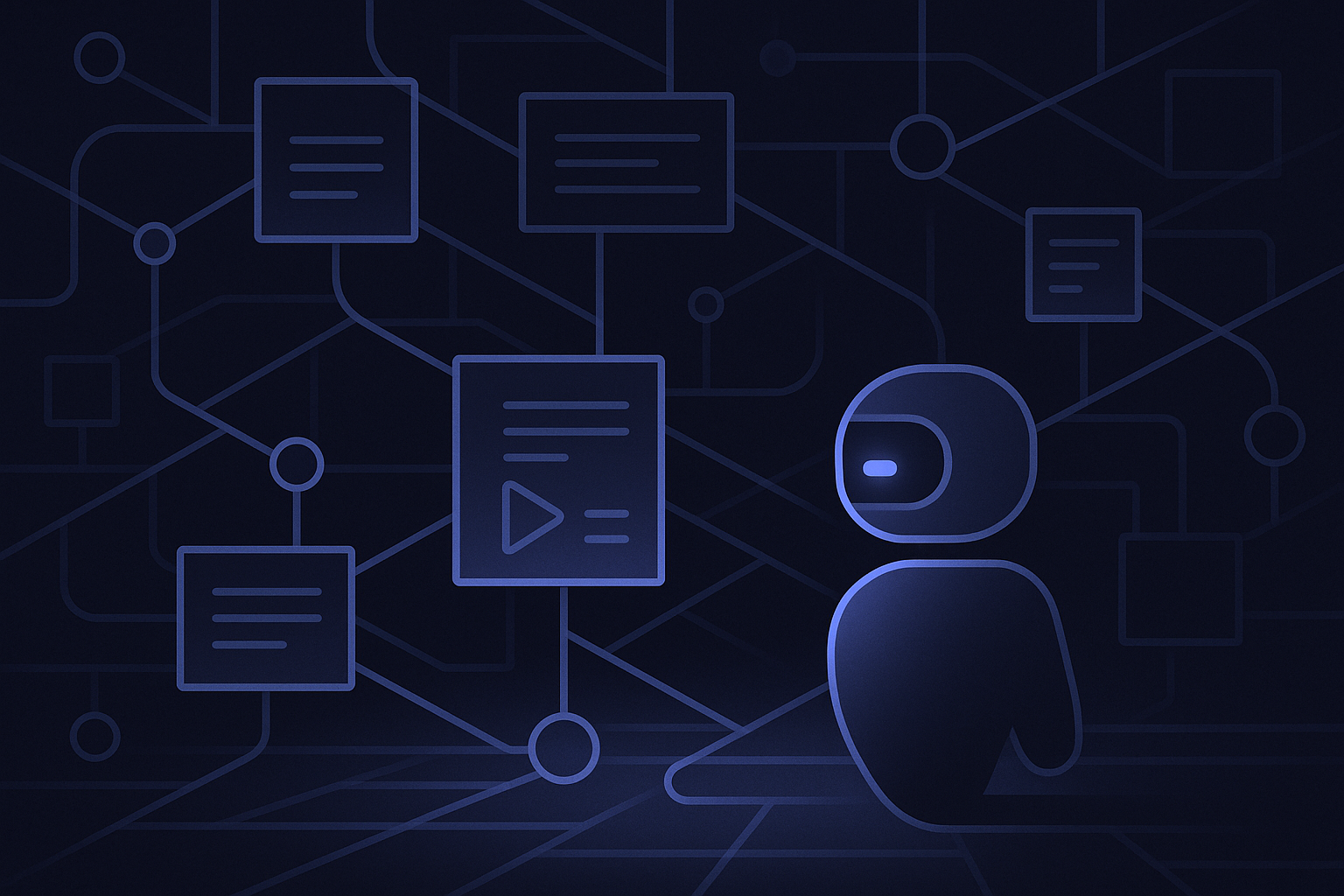
Manus AI launched publicly in early 2025 and quickly became one of the most-discussed AI systems among operators who care about autonomous task completion. It's not a chatbot. It's not a search engine. It's an agentic system — meaning it receives a high-level goal, breaks it into steps, uses tools (browser, code execution, file management) to complete those steps, and delivers a finished artifact rather than a list of links or a conversational reply.
The distinction matters enormously for site owners. When a user asks Manus to "research the best payment processors for SaaS companies and write a comparison report," Manus doesn't return ten blue links. It browses pages, reads content, synthesizes findings, and produces a structured document. Your site either makes it into that document — with your positioning intact — or it doesn't.
The Agentic Loop and Why It's Different
The agentic loop looks like this: goal decomposition → tool selection → execution → evaluation → re-planning if needed → final output. The browser tool in that loop is not performing a keyword-matched search. It's performing task-driven retrieval. The agent evaluates pages not for query relevance but for task utility: does this page give me the specific information I need to complete step three of this plan?
That's a fundamentally different evaluation function. Pages optimized for keyword matching may score well on traditional signals and still get skipped by Manus because they don't answer the specific sub-question the agent is currently trying to resolve.
What Manus Is Not
Manus is not GPTBot, ClaudeBot, or PerplexityBot. Those crawlers index your content into a training corpus or a retrieval index. Manus is a real-time browsing agent. It visits your page live, during task execution, in response to a user's goal. The implication: robots.txt rules targeting known LLM crawlers by user-agent won't necessarily intercept Manus's browsing sessions, because it may use a standard browser-like user-agent rather than a declared bot identifier. This is an area worth monitoring closely.
Practical rule: Don't assume that blocking GPTBot or ClaudeBot in robots.txt gives you full control over which AI systems read your content. Agentic browsers are a separate access pathway that requires its own access policy review.
How Agentic AI Crawling Differs From LLM Indexing
There are now at least three distinct classes of AI system that interact with your site, and conflating them leads to bad strategy.
| System Type | Example | When It Visits | What It Wants | Citation Mechanism |
|---|---|---|---|---|
| Training crawler | GPTBot (OpenAI) | Bulk crawl, periodic | Raw content for model training | Baked into model weights |
| Retrieval indexer | PerplexityBot | Near-real-time index | Snippets for RAG retrieval | Inline citation in response |
| Agentic browser | Manus AI | Live, task-triggered | Task-specific facts, structure | Embedded in output artifact |
| Hybrid agent | Gemini Deep Research | Live + indexed | Multi-hop reasoning | Report-style with sources |
The mistake teams make is treating all four of these the same way. Blocking GPTBot is a training-corpus decision. Optimizing for PerplexityBot is a retrieval-snippet decision. Optimizing for Manus AI is a task-utility decision — and that requires different content architecture.
The RAG vs. Agentic Distinction
Retrieval-Augmented Generation (RAG) systems like Perplexity index your content and retrieve relevant chunks when a user query matches. The optimization target is chunk-level clarity: short, self-contained answers with strong semantic signal.
Agentic systems like Manus don't necessarily have a pre-built index of your site. They navigate to it mid-task. That means your page has to earn trust in real time — loading fast, presenting its key claim immediately, structuring information so a reasoning model can extract what it needs without parsing noise.
Temporal Access Patterns
One practical consequence: agentic systems visit you at unpredictable times, triggered by unpredictable user goals. Your server logs will show visits that don't cluster around crawl schedules. They may look like individual browsing sessions. Many teams don't notice these at all. The CrawlProof blog has been tracking how different AI crawler behaviors show up in server logs — the patterns for agentic systems are genuinely different from batch indexers.
Why Standard SEO Signals Don't Transfer
PageRank, domain authority, backlink counts — these are signals built for a model where a search engine ranks a list of results for a human to choose from. Manus AI doesn't produce a ranked list. It makes a judgment call about which sources to use for a task. That judgment is not based on your link graph.
Teams think the problem is they need more backlinks or higher domain authority to get cited by AI. The real problem is that AI agents are making a different kind of decision — one based on content structure, factual density, and task alignment rather than popularity signals.
What Doesn't Work
- Keyword density optimization — Manus is reading for meaning, not keywords. Stuffing a target phrase into H2s doesn't make the page more useful to a task-driven agent.
- Internal link sculpting — Agents follow links opportunistically during task execution, not because you've arranged your internal link architecture carefully.
- Meta description click-through optimization — There's no SERP. Meta descriptions matter only as machine-readable summaries; if you've written them for human click-through rather than machine extraction, they're doing the wrong job.
- Thin FAQ pages with schema — FAQ schema was useful for Google's featured snippets. Agents can read the full page; they're not looking for the schema shortcut. A page that answers one narrow question well outperforms a page that answers twenty questions shallowly.
What the Actual Signal Is
The practical question is: if a reasoning model is mid-task and lands on your page, can it extract a clear, specific, trustworthy answer to the sub-question it's currently trying to resolve? That requires: a strong opening claim, supporting evidence presented in a scannable structure, minimal distractions, and enough context that the agent can assess trustworthiness without external verification.
Understanding what AEO is and why it isn't SEO is the necessary foundation here — the optimization targets really are different, and teams that treat AEO as "SEO for AI" will keep missing the mark.
What Manus AI and Similar Agents Look For on a Page
Based on how agentic systems process web content, there are several structural properties that increase the probability of a page being used rather than skipped.
Structural Clarity
Agents extract content programmatically. Pages with clear heading hierarchies, short paragraphs, and predictable information architecture are easier to parse than pages with complex nested layouts, heavy JavaScript rendering dependencies, or content buried behind tabs and accordions.
Practical rule: If your key claim is not visible in the first 150 words of rendered HTML, an agent doing a time-constrained task may skip to a better-structured competitor. Leads with the answer, supports with evidence — not the reverse.
Specific patterns that help:
- H1 that states the page's core claim, not just its topic
- H2s that answer sub-questions, not just label sections
- The first sentence of each section functioning as a standalone summary
- Tables for comparative data (agents extract tables well)
- Numbered lists for processes and sequences
Factual Density and Specificity
Agents are trying to complete tasks. Vague claims don't help. "Many companies use this approach" is not useful to an agent trying to verify a specific claim. "In a 2025 benchmark across 47 SaaS pricing pages, X pattern appeared in 73% of top-performing cohorts" is extractable, citable, specific.
You don't need to fabricate data. You do need to be specific about scope, conditions, and caveats rather than writing in comfortable generalities.
Machine-Readable Metadata
Schema markup, llms.txt, and structured data help agents understand what a page is about before fully parsing it. The llms.txt and skill.md specification is worth implementing — it's a lightweight signal to AI systems about how your site's content is organized and what it's authoritative on. For agentic systems that may check this file before deciding how to traverse your site, it's low-effort infrastructure with real upside.
Trust Signals an Agent Can Verify
Humans read trust signals like design quality and brand recognition. Agents read different trust signals:
- Author and publication date in structured metadata
- Internal consistency (claims that don't contradict each other across the page)
- Specificity (specific claims are harder to make up and therefore more trusted)
- Source references (even without hyperlinks, naming a source increases apparent credibility)
- Schema markup identifying the organization, author credentials, and content type
Common Failure Modes: What Breaks in Practice
Most sites that are invisible to Manus AI and similar agentic systems aren't failing because of a single obvious mistake. They're failing because of an accumulation of friction — individually minor issues that combine to make the page non-viable for agentic extraction.
JavaScript-Gated Content
If your key content requires JavaScript execution to render, agentic systems that don't run a full JS engine will see a blank or partial page. This is a more common problem than most teams realize. A page that looks great in a browser may present almost nothing to a scraping-style agent. Server-side rendering or static generation is the defensive move here.
Paywall or Login Interstitials
Obvious in retrospect, but worth stating: agents cannot log in. If your most authoritative content is behind a paywall, it will not be cited by agentic systems regardless of its quality. The strategic question is whether to have a freely accessible summary or excerpt that agents can use — not to give away everything, but to establish citability.
Canonical Confusion and Duplicate Content
Agents that arrive at a page via a URL may encounter a canonical tag pointing elsewhere. Depending on implementation, this can cause the agent to abandon the page mid-extraction. Clean canonicalization matters for agentic visibility just as it does for traditional indexing.
Over-Structured Thin Pages
A mistake that's become more common as teams cargo-cult SEO best practices: pages with perfect schema markup, clean heading structure, and a strong meta description — but almost no substantive content. Schema is not a substitute for depth. An agent that parses your perfectly structured FAQ and finds three-sentence answers to complex questions will still skip to a more detailed source.
Practical rule: Schema markup is infrastructure, not content. It helps agents find and categorize your content faster. It cannot make shallow content useful. Invest in depth first, then layer structured data on top.
Robots.txt Rules That Don't Account for Agentic User-Agents
As noted earlier, Manus AI and similar agentic systems may not send the user-agent strings you've blocked. If you have specific access policies you want to enforce, verify which user-agents these systems actually send — and revisit your robots.txt to ensure it reflects your actual intent, not just the bots you knew about when you wrote it. You can run a free AEO audit on CrawlProof to see exactly what AI crawlers find and miss on your pages, including robots.txt parsing behavior.
The AEO Architecture Changes Manus AI Forces

A useful way to think about it is this: every page on your site has two audiences now — the human who might read it, and the AI agent that might extract from it. These audiences have different needs, and optimizing for one while ignoring the other is a compounding mistake.
The practical architectural changes that Manus AI makes necessary:
Content Architecture
Move from topic-based content architecture to question-based content architecture. Instead of a page titled "Payment Processing," a page titled "How to choose a payment processor for a subscription SaaS business" — and then actually answering that question, specifically, in the first three paragraphs.
This isn't about keyword stuffing questions. It's about aligning page structure with the task-decomposition patterns of agentic systems. When Manus breaks a user goal into sub-questions, your page should map to one of those sub-questions clearly enough that the agent can recognize it as the right source without extensive reading.
Access Architecture
Decide explicitly which AI systems you want to allow access to which content. This requires:
- A robots.txt review that accounts for known and unknown AI crawlers
- An llms.txt file that describes your site's content map for AI systems
- A schema markup pass that ensures content type, authorship, and date are machine-readable on every key page
- Server-side rendering for any page you want AI-visible
Citation Architecture
The goal isn't just to be read — it's to be cited in a way that preserves your positioning. That means:
- Page titles and H1s that are quotable and specific
- Claims stated in ways that survive extraction without context collapse
- Organization schema that ensures your brand name is attached to extracted content
- Consistent naming conventions across pages so an agent citing multiple pages from your site recognizes them as the same source
You can browse recent AEO audits on CrawlProof to see how real sites score across these dimensions — the patterns in what gets flagged are instructive even if you're auditing a different site.
Implementation Sequence: Auditing and Adapting for Agentic Visibility
Here is a practical sequence for teams who want to move from awareness to implementation. This isn't a one-time project — it's an ongoing operational posture.
Baseline audit — Run an AEO audit on your highest-value pages. What does an AI crawler actually see? What schema is present? What content is missing from the machine-readable view? This is the starting point, not keyword research.
Robots.txt and access policy review — Map your current robots.txt rules against the known user-agents for GPTBot, ClaudeBot, PerplexityBot, Google-Extended, and any others relevant to your site. Identify gaps where your access policy doesn't reflect your intent.
llms.txt deployment — Create and deploy an llms.txt file at your root. Even a minimal version that describes your site's main content categories and authoritative pages is better than nothing. Update it whenever you publish significant new content.
Schema markup pass — Ensure every key page has Article or WebPage schema with author, datePublished, dateModified, and publisher filled in. Add FAQPage schema only where it reflects genuine depth, not as a thin-content shortcut.
Content architecture audit — Review your top 20 pages. Does each one open with a clear claim? Is the key information above the fold in the rendered HTML? Would a reasoning model know within 100 words what specific question this page answers?
JavaScript rendering check — Identify any pages where critical content is rendered client-side only. Prioritize converting these to server-side rendering or static generation.
Canonical and crawlability review — Verify clean canonicalization, no accidental noindex on high-value pages, and correct handling of pagination or faceted navigation that might confuse agentic traversal.
Monitor agentic access in server logs — Set up log monitoring that captures user-agent strings and visit patterns. Agentic systems leave a distinctive fingerprint — individual sessions, unusual referrers, rapid page sequences. Knowing which agents are visiting which pages is operational intelligence.
Iterative content depth improvements — Using audit findings, prioritize pages where content depth is the limiting factor. This is ongoing editorial work, not a one-time fix.
Re-audit after changes — Close the loop. After deploying schema changes, llms.txt, or content improvements, re-run the AEO audit to verify the changes are visible to AI crawlers, not just to human visitors.
Practical rule: Treat your AEO audit like a recurring operational check, not a one-time project. Agentic AI systems evolve faster than traditional search crawlers. What works in Q1 may need adjustment by Q3. Build the audit into your content calendar.
How CrawlProof Fits Into This Workflow
The challenge with Manus AI and agentic visibility generally is that the feedback loop is invisible by default. You don't get a "cited by Manus" notification. You don't see a referral in GA4. The only way to know whether your site is well-positioned for agentic extraction is to audit it from the AI's perspective — which is exactly what CrawlProof is built to do.
CrawlProof runs an AEO audit on any URL and reports what LLM crawlers and answer engines can actually find — content visibility, schema markup, robots.txt parsing, AI-bot access configuration, and positioning signals. The audit shows you the gap between what your page looks like to a human browser and what it looks like to an AI crawler.
For teams that are starting to think seriously about Manus AI and agentic visibility, the most useful first step is understanding the current state of your site from the AI perspective. Are your key pages rendering correctly for non-JS crawlers? Is your schema complete and correctly structured? Are the right bots allowed and the wrong ones blocked? Are your content claims specific enough to be extractable?
These questions don't have obvious answers without tooling. The mistake teams make is assuming their site is AI-visible because it's well-optimized for traditional search. Those are related but different things — and the gap is where agentic systems like Manus AI make their decisions.
Try crawlproof.com
CrawlProof helps site owners see their site the way AI crawlers do — so you know what Manus AI, Perplexity, ChatGPT, and other answer engines actually find when they visit your pages. Run a free AEO audit at crawlproof.com.
