SaaS AEO is becoming a real operational problem, not a slide in the marketing roadmap. Your product pages rank. Your docs are live. Your comparison pages exist. Then a buyer asks an answer engine for the best tool in your category, and your company is either missing, summarized badly, or cited for an old claim from a forgotten page.
Teams think the problem is content volume. The real problem is content reliability across crawlers, answer extraction, product changes, and buyer workflows.
That changes the conversation. SaaS AEO is not just writing pages that mention your category. It is the architecture that lets AI answer engines discover, parse, trust, and reuse the right parts of your website. The practical question is not whether AI search matters. The practical question is whether your site gives answer engines a clean, current, machine-readable version of your product reality.
This guest contribution from the team at saasrow.com is written for operators who already know basic SEO and now need to make SaaS AEO work in production.
Table of contents
Why SaaS AEO is an architecture problem
Most SaaS teams approach answer engine optimization like a content campaign. They add definitions, publish listicles, and hope AI search tools notice. Some of that helps. Most of it does not fix the underlying problem.
A useful way to think about it is this: SEO is often page discovery plus ranking. SaaS AEO is page discovery plus answer extraction plus citation confidence. Answer engines need to understand what your product does, who it is for, what it integrates with, how it is priced, what changed recently, and which page is the canonical source for each claim.
That is not a blog calendar. That is a publishing system.
Demand capture moved beyond SERPs
The old flow was predictable: query, results page, click, landing page, conversion path. The new flow is messier. A buyer might ask an AI assistant to compare tools, summarize vendor differences, create a shortlist, or explain migration risk before they ever visit your site.
If your pages are vague, outdated, or blocked from useful crawling, the model may still answer. It just will not answer with your preferred facts.
Practical rule: Treat every high-intent answer as a pre-sales conversation where your website may be the source, but not the interface.
The SaaS site has too many moving parts
SaaS websites change constantly. Pricing pages shift. Docs are versioned. Integrations come and go. Security pages are maintained by a different team. Blog posts age. Product marketing pages make claims that engineering quietly changes six months later.
What breaks in practice is consistency. The answer engine finds three pages about the same feature, each with different wording. It may choose the oldest one because it is easiest to crawl or has the clearest structure. That is how teams lose control of product narrative without noticing.
The operating model matters more than the acronym
AEO sounds like a marketing function. In SaaS, it touches marketing, content, SEO, engineering, developer relations, support, product, and sometimes legal. Nobody wants another committee. But you do need an operating model.
Here is the difference:
| Primary goal | Rank and earn clicks | Be discovered, summarized, and cited accurately |
| Main asset | Optimized page | Reliable answer source |
| Technical focus | Indexability, speed, internal links | Crawl access, structured facts, canonical claims |
| Content pattern | Keyword pages and articles | Extractable answers, comparisons, implementation guidance |
| Measurement | Rankings, sessions, conversions | AI crawler hits, citation presence, answer accuracy, assisted demand |
The mistake teams make is trying to bolt AEO onto the end of SEO. It belongs earlier, where content architecture and technical publishing decisions are made.
Build the SaaS AEO crawl layer
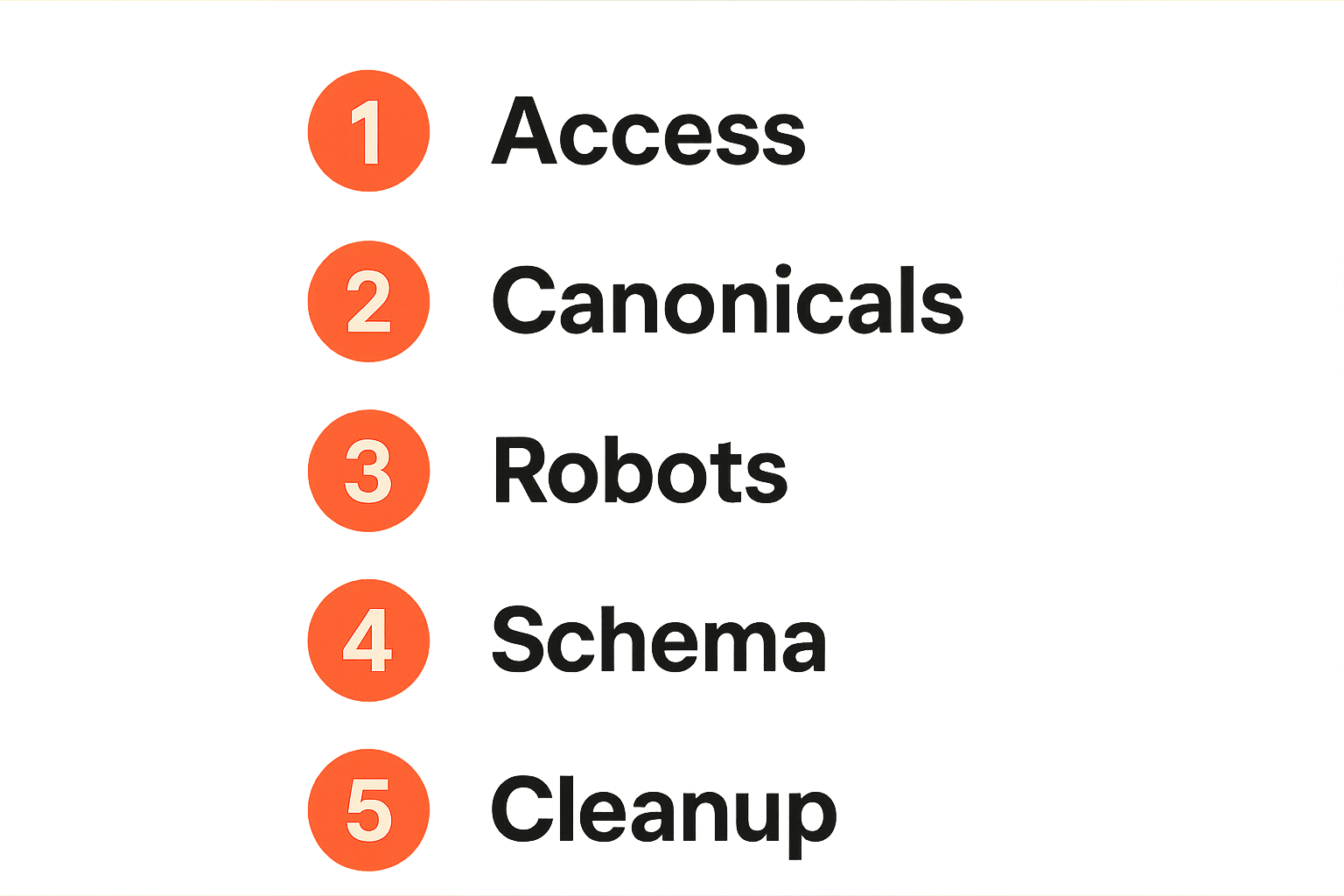
AI answer engines cannot cite what they cannot reliably access or parse. That does not mean every crawler should get unlimited access. It means your crawl layer should be intentional.
For SaaS AEO, crawlability is not binary. You need to decide which pages should be easy for answer engines to understand, which pages should be excluded, and which pages should exist in a simplified, canonical form.
Separate crawler access from human UX
Many SaaS sites are built for a polished human journey: animations, personalization, popups, cookie banners, embedded forms, client-rendered tabs, and dynamic pricing components. Those can work for users and still make life harder for crawlers.
Your AEO crawl layer should answer a few basic questions:
- Can important content render without complex client-side interaction?
- Is the main answer present in the initial HTML or a crawlable static representation?
- Are docs, pricing, comparison, integration, and security pages accessible without login?
- Are robots directives aligned with the pages you actually want answer engines to use?
- Are canonical tags pointing to the right source of truth?
Practical rule: If a claim matters in an AI-generated answer, it should exist on a stable, crawlable URL with a clear heading and surrounding context.
Make canonical pages machine-readable
For each important topic, choose the page that should be treated as the source. Then make that page unambiguous.
A canonical SaaS AEO page usually has:
- A direct answer near the top.
- Clear product category language.
- Specific use cases and exclusions.
- Integration names written as text, not only logos.
- Pricing or packaging details if relevant.
- Date-sensitive claims kept current.
- Structured headings that match buyer questions.
- Internal links to docs, API references, security pages, and changelogs.
This matters because answer engines often synthesize from fragments. If the strongest fragment is buried in an image, modal, tab, or old blog post, you are making the wrong page compete with the right one.
Control what AI crawlers should not use
AEO is not an invitation to expose everything. SaaS companies often have pages that should not influence answer engines: deprecated docs, old pricing pages, thin campaign landing pages, staging URLs, customer-specific help articles, outdated partner pages, and duplicate release notes.
Control mechanisms include robots.txt, canonical tags, noindex where appropriate, internal link hygiene, sitemap quality, and emerging files like llms.txt. The goal is not secrecy. The goal is source control.
A simple crawl decision table helps:
| Product overview | Allow and optimize | Core answer source |
| Pricing | Allow if public and current | Buyers ask pricing questions |
| Docs | Allow stable versions | Supports technical answers |
| Deprecated docs | Limit or clearly label | Prevent stale citations |
| Gated assets | Do not rely on them | Hard to parse and cite |
| Campaign variants | Canonicalize or noindex | Avoid conflicting claims |
AEO pages do not need to sound robotic. They do need to be extractable. The page should make it easy for a system to lift a correct answer without stripping away important context.
This is where many SaaS content teams overcorrect. They write for a generic AI reader and flatten the copy until it says nothing. Good SaaS AEO still has positioning. It is just more explicit about facts, constraints, and fit.
Put the answer before the pitch
The first useful block on a page should answer the question the page exists to address. If the page is about SOC 2 automation software, do not open with five paragraphs about the future of trust. Say what the product does, who uses it, and which workflow it improves.
A strong answer block might follow this pattern:
- Product category: what the software is.
- Primary user: who operates it.
- Workflow: what task it improves.
- Differentiator: what makes it distinct.
- Constraint: what it is not built for.
That last line matters. Answer engines often need to distinguish between similar tools. Saying what you are not prevents bad matches.
Use evidence blocks and comparison language
Answer engines are asked comparative questions constantly: best software for small teams, alternative to a known vendor, tool for a regulated workflow, platform with a specific integration. If your site avoids comparisons, other sources will define the comparison for you.
Useful evidence blocks include:
- Supported integrations.
- Deployment options.
- Security and compliance posture.
- Pricing model basics.
- API availability.
- Customer segment fit.
- Migration requirements.
- Known limitations.
Do not turn every page into a competitor attack. The better pattern is structured comparison language. For example: built for product-led teams that need self-serve onboarding, not for enterprises that require custom on-premise deployment.
Keep pricing, docs, and changelogs aligned
Pricing pages, docs, and changelogs are high-trust sources for answer engines because they contain operational facts. But they often disagree with marketing pages.
If the pricing page says feature X is available only on the business plan, the product page should not imply it is available to every user. If docs say an integration is in beta, the integration page should not present it as generally available. If the changelog says an API endpoint changed, the docs should reflect it.
Practical rule: AEO rewards consistency more than clever phrasing. One stale page can poison an otherwise clean answer set.
Schema, llms.txt, and machine contracts
Structured data and machine-readable routing files are not magic ranking levers. They are contracts. They tell crawlers what an entity is, where authoritative information lives, and how pages relate to each other.
The practical question is not whether schema markup will make you appear in every AI answer. It will not. The question is whether your site gives machines enough structured context to reduce ambiguity.
Treat schema as a publishing contract
For SaaS companies, schema should support the way answer engines identify entities and page purpose. Common candidates include Organization, SoftwareApplication, Product where appropriate, FAQPage, BreadcrumbList, Article, HowTo, and documentation-related markup when relevant.
A lightweight SoftwareApplication pattern might define:
entity: SoftwareApplication
name: Example SaaS Platform
applicationCategory: Project management software
operatingSystem: Web
offers: public pricing page URL
publisher: Organization entity
sameAs: official social and profile URLs
The schema should match visible page content. Do not use structured data to claim features that are not actually explained on the page. That creates trust problems and validation issues.
Use llms.txt as a routing file
The emerging llms.txt pattern gives site owners a way to point AI systems toward useful resources. It is not a universal standard with guaranteed behavior across every model or crawler. Still, it is a practical way to publish intent.
For SaaS AEO, an llms.txt file can route crawlers to:
- Product overview pages.
- Docs index pages.
- API references.
- Pricing information.
- Security and compliance pages.
- Changelog or release notes.
- Canonical comparison pages.
Example structure:
# Example SaaS

## Product
- Overview: https://example.com/product
- Pricing: https://example.com/pricing

## Developers
- API docs: https://example.com/docs/api
- Webhooks: https://example.com/docs/webhooks

## Trust
- Security: https://example.com/security
- Compliance: https://example.com/compliance
The mistake teams make is treating llms.txt as a dumping ground. Keep it short, curated, and aligned with the pages you are willing to maintain.
Validate structured data before launch
Schema and routing files drift. A product marketer changes a page title. Engineering moves docs. A pricing page is split by region. Nobody updates structured data.
Build validation into the publishing workflow:
- Check schema syntax before merge or publish.
- Confirm required fields match visible page content.
- Verify canonical URLs resolve correctly.
- Compare llms.txt links against live page status.
- Re-run validation after site migrations.
This is not glamorous work. It prevents the boring failures that make answer engines cite the wrong source.
Map SaaS content to buyer workflows
AEO content should map to how buyers ask questions, not how your website navigation is organized. Most SaaS navigation reflects internal priorities: product, solutions, resources, pricing, company. Buyers think in problems, risks, comparisons, and implementation constraints.
If you want answer engines to connect your product to real demand, your site needs pages that cover each stage with enough specificity to be useful.
Problem-aware pages
Problem-aware pages explain the workflow pain before they introduce the product. These pages answer questions like:
- How do I reduce manual reporting in customer success?
- What is the best way to manage approval workflows for finance teams?
- How can a small security team monitor vendor risk?
The key is to connect the problem to a product category without forcing a hard sell too early. Answer engines often use these pages to understand category relevance.
Evaluation pages
Evaluation pages help buyers compare options. These include alternative pages, versus pages, category pages, integration pages, and use-case landing pages.
They need specific signals:
- Who each option fits.
- What tradeoffs matter.
- Which features are table stakes.
- Where your product is strong.
- Where another approach may be better.
This is uncomfortable for some teams. They want every page to say the product is best for everyone. That fails in AI answers because the model is usually being asked to narrow choices, not repeat positioning.
Implementation pages
Implementation pages are underrated for SaaS AEO. Buyers ask answer engines about setup effort, API support, migration steps, integrations, data model changes, and admin responsibilities.
Content that works here includes:
- How-to documentation.
- Migration guides.
- API guides.
- Security setup pages.
- Integration walkthroughs.
- Admin onboarding checklists.
These assets help answer engines understand not only what your software claims to do, but how it works in the real world.
Measure AEO without pretending it is SEO
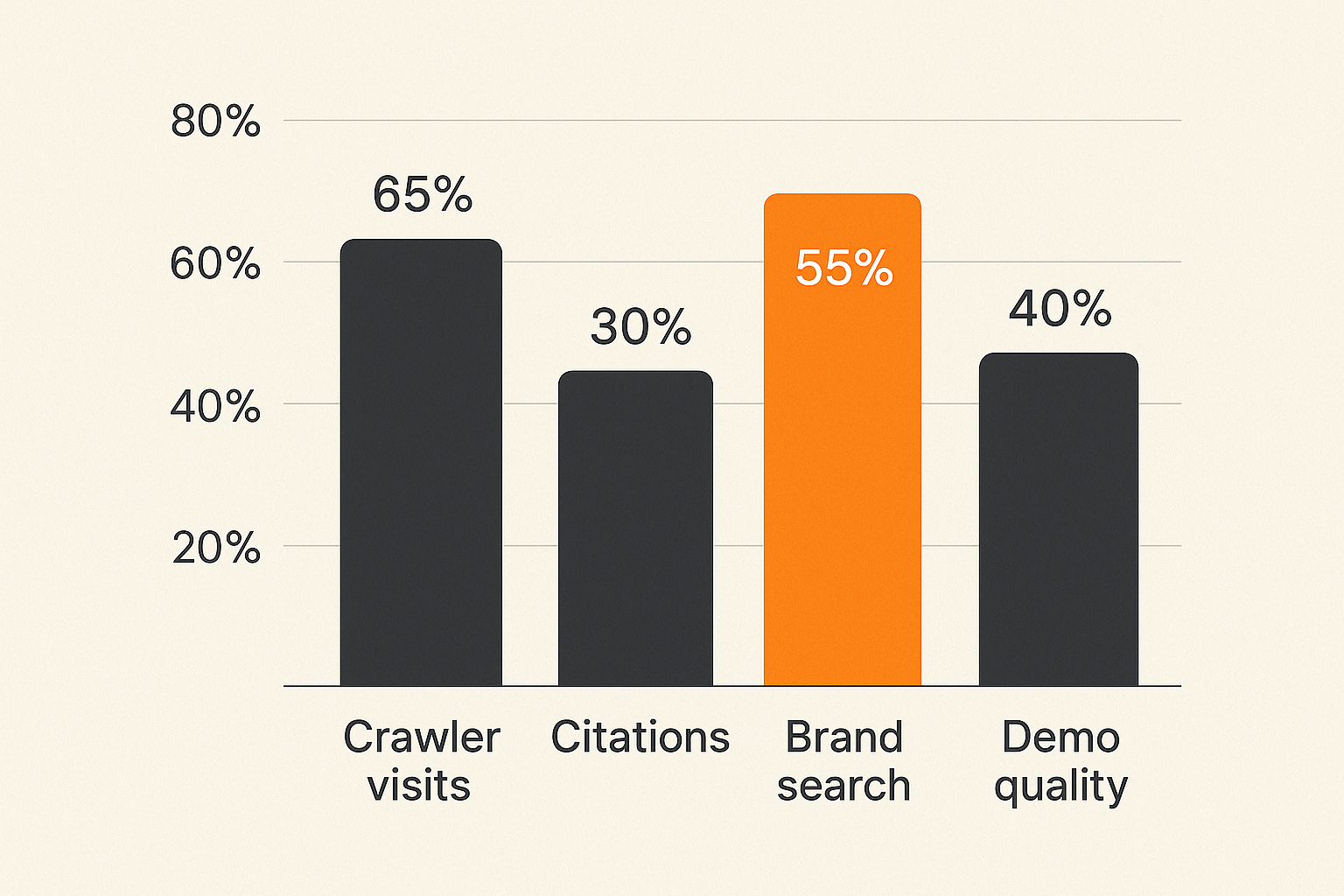
SaaS AEO measurement is still early. Anyone promising a perfect attribution model is selling certainty the channel does not yet provide. But that does not mean you should fly blind.
You can measure three practical layers: crawler behavior, answer presence, and business impact proxies. None is perfect alone. Together, they show whether your AEO system is improving.
Track crawler behavior
Start with server logs and crawler detection. You want to know which AI crawlers are visiting, which pages they request, how often they return, and whether they hit important pages after you update them.
Useful questions:
- Are AI crawlers reaching product, pricing, docs, and comparison pages?
- Are they wasting crawl activity on duplicate or low-value URLs?
- Do important pages return clean 200 responses?
- Are crawler visits increasing after publishing or restructuring?
- Are blocked resources preventing useful parsing?
Crawler visibility does not prove citation. It proves access. Access is the first layer of the system.
Monitor citations and answer presence
Next, test answer engines with repeatable prompts. Do not rely on one-off screenshots. Create a prompt set tied to buyer workflows.
For example:
- Best software for a specific use case.
- Alternatives to a known competitor.
- Tools with a required integration.
- Category explanation questions.
- Implementation or migration questions.
- Security or compliance questions.
Record whether your brand appears, whether your website is cited, whether the answer is accurate, and which source the engine seems to rely on. You will see volatility. The value is in directional change and error detection.
Use proxy metrics carefully
Some AEO impact will appear as direct traffic, branded search, assisted conversions, or higher-quality sales conversations. Some will not be easy to attribute.
Use proxies, but do not worship them:
| AI crawler visits | Access and crawl interest | Accurate citation |
| Citation tracking | Visibility in sampled answers | Total demand impact |
| Branded search lift | Growing awareness | Exact source of awareness |
| Demo quality notes | Better buyer education | Full attribution |
| Direct traffic | Possible answer-engine influence | Channel certainty |
The practical question is whether your answer presence is getting more accurate, more consistent, and more aligned with commercial pages.
Workflow: implement SaaS AEO in 30 days
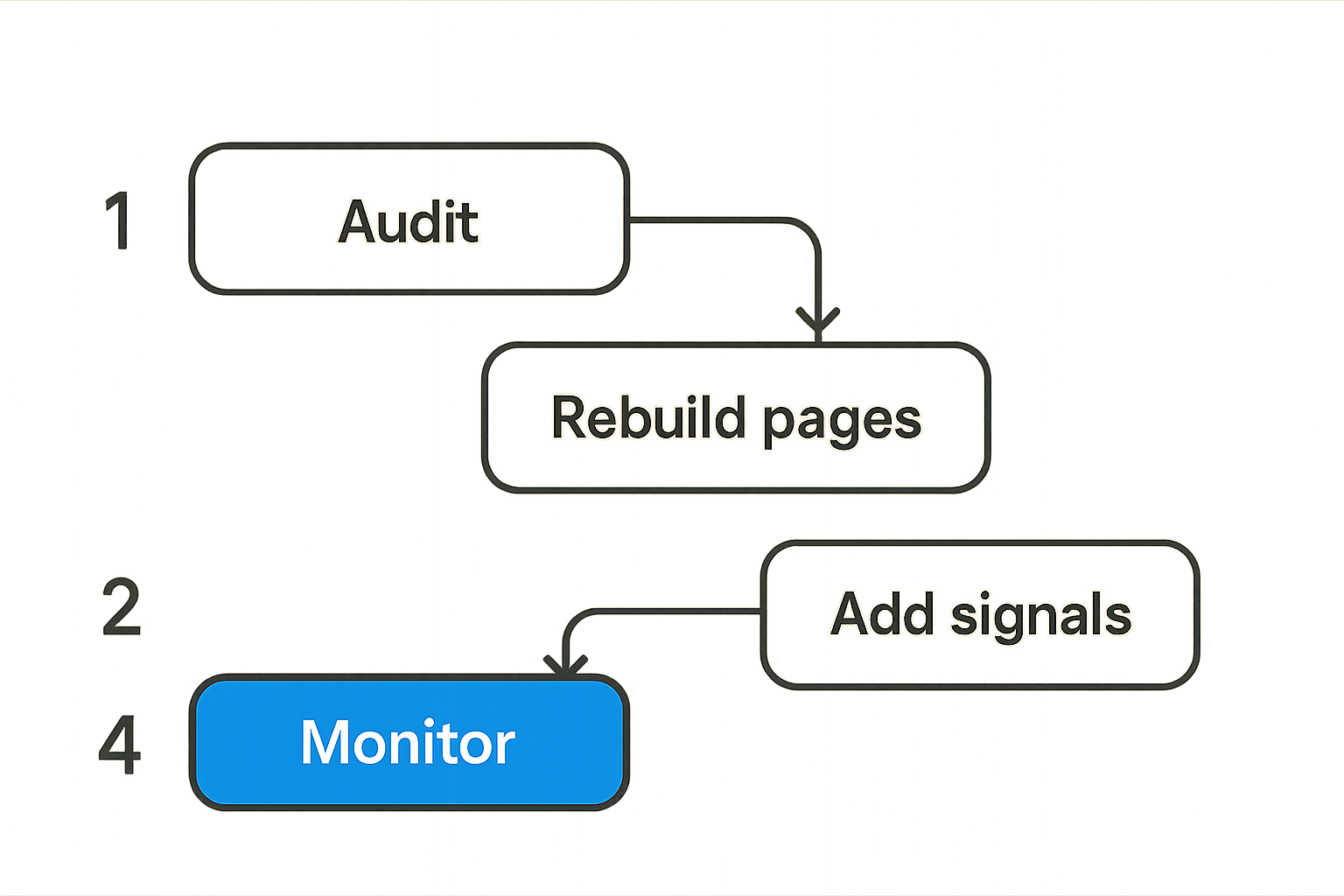
You do not need a six-month transformation to start. You need a focused operating sprint that connects technical access, content quality, and measurement.
The mistake teams make is starting with 100 new articles. Start with the pages answer engines are most likely to use when describing your product.
Week 1: audit crawlability and claims
Build a working inventory of pages that define your product reality.
- List product, pricing, docs, integration, security, comparison, and category pages.
- Check indexability, canonical tags, status codes, rendering, sitemap inclusion, and robots directives.
- Identify stale or conflicting claims.
- Review server logs for AI crawler access where available.
- Create a short list of priority URLs that should become authoritative answer sources.
Do not try to fix everything. Choose the pages that influence commercial understanding.
Week 2: rebuild priority pages
Rewrite or restructure the priority pages for extraction.
A practical page pattern:
- Direct answer block.
- Who it is for.
- Core workflows.
- Differentiators and limitations.
- Proof or evidence blocks.
- Links to docs, pricing, security, and integrations.
- Last-updated signal where appropriate.
This is not about making pages bland. It is about making the important facts easy to find.
Week 3: add machine-readable signals
Add or correct structured signals.
- Validate Organization and SoftwareApplication schema.
- Add breadcrumbs where navigation depth matters.
- Use FAQ markup only when the Q&A is visible and genuinely useful.
- Create or refine llms.txt.
- Clean XML sitemaps.
- Remove or canonicalize duplicate campaign pages.
- Make sure docs and product pages link to each other where claims depend on implementation detail.
Practical rule: Machine-readable signals should clarify the human-readable page, not compensate for a weak one.
Week 4: monitor and iterate
Now test. Use a small prompt suite and crawler monitoring.
Check:
- Which AI crawlers request your priority pages.
- Whether answer engines cite your site for target prompts.
- Whether answers include current claims.
- Which third-party pages are being used instead of yours.
- Where the answer is wrong or incomplete.
Then iterate page by page. AEO work compounds when each fix improves the source of truth, not when each team creates another isolated asset.
Common SaaS AEO failure modes
Most AEO failures are not dramatic. They are small inconsistencies that accumulate until answer engines cannot tell which version of your story is correct.
The operational risk is simple: buyers get an answer before they get to you. If the answer is wrong, incomplete, or missing your product entirely, your funnel has already leaked.
Thin AI-generated pages
Publishing hundreds of AI-generated pages around every keyword variation is the fastest way to create noise. Answer engines do not need another generic definition of your category. They need reliable, specific information that connects your product to a real workflow.
Thin pages usually fail because they have:
- No unique product facts.
- No implementation detail.
- No clear authoritativeness.
- No connection to docs or pricing.
- Repetitive phrasing across many URLs.
What works is fewer pages with more operational clarity.
Disconnected docs and marketing
Docs are often maintained by technical teams. Marketing pages are maintained by growth or product marketing. If they disagree, answer engines may trust whichever page is more accessible or specific.
Common examples:
- Marketing says an integration is supported, docs say it is beta.
- Pricing says a feature is enterprise-only, a blog post says it is available to all teams.
- Docs mention a new API version, comparison pages describe the old workflow.
- Security pages are current, but trust center summaries are stale.
Fixing this requires ownership, not just editing.
JavaScript and gated content traps
Some important SaaS content is hidden behind forms, tabs, app-like interfaces, embedded PDF viewers, or client-side components. That may be fine for users. It is risky if those assets contain the only clear explanation of your product.
Examples that break in practice:
- Feature tables rendered only after user interaction.
- Pricing toggles that hide plan differences from crawlers.
- Integration lists shown as logos without text labels.
- Customer proof locked inside PDFs with weak HTML context.
- Documentation search pages with no static index.
If the content matters for answer extraction, make a crawlable representation available.
What works, what fails, and who owns it
SaaS AEO succeeds when it becomes part of the publishing workflow. It fails when it becomes a side project owned by nobody with merge access.
This is not a call to make every marketer technical or every engineer responsible for content. It is a call to define handoffs clearly.
What works
Strong SaaS AEO programs usually have a few boring habits:
- They maintain canonical pages for product facts.
- They keep docs, pricing, and marketing aligned.
- They monitor AI crawler access.
- They use schema and llms.txt intentionally.
- They update pages when product reality changes.
- They test answer engines with repeatable prompts.
- They treat inaccurate answers as source-quality defects.
The common theme is operational discipline. Answer engines reward clear source material because it reduces ambiguity.
What fails
Weak programs usually look busy from the outside. They publish a lot. They update design. They mention AI in headlines. But they do not improve source reliability.
Patterns that fail:
- Creating AI search pages without technical crawl checks.
- Adding schema that does not match visible content.
- Blocking docs while expecting technical citations.
- Letting old blog posts outrank current product pages internally.
- Measuring only rankings while ignoring answer accuracy.
- Treating AEO as a campaign instead of a system.
The result is a site that looks active but sends mixed signals.
Ownership model
A practical ownership model is small:
- SEO or growth owns the AEO roadmap and measurement.
- Content owns extractable page structure and editorial updates.
- Product marketing owns positioning and competitive accuracy.
- Engineering owns rendering, crawl access, schema deployment, and redirects.
- Docs or developer relations owns technical source accuracy.
- RevOps or sales feedback captures answer-quality issues from buyers.
You do not need weekly meetings with everyone. You need a clear path from detected issue to shipped fix.
Where CrawlProof fits into the SaaS AEO stack
SaaS AEO has two sides: what you publish and what crawlers actually do with it. Most teams can see the first side. The second side is harder.
That is where tooling matters. If you cannot see AI crawler behavior, you are guessing whether your technical and content changes are being discovered.
Use CrawlProof to see AI crawler behavior
CrawlProof helps site owners and marketers understand how AI crawlers interact with their websites. For SaaS teams, that visibility is useful because it connects AEO work to actual crawl activity.
Instead of asking only whether a page is optimized, you can ask:
- Are AI crawlers reaching this page?
- Which important pages are ignored?
- Are crawlers wasting time on low-value or duplicate URLs?
- Did crawl behavior change after a migration or content update?
- Are technical directives helping or hurting answer-engine discovery?
That changes the conversation from opinion to workflow.
Connect findings to content and engineering
The best use of CrawlProof is not as a dashboard someone checks once a month. It should feed the operating loop.
If AI crawlers are hitting outdated docs, clean the docs and update links. If they are missing pricing pages, inspect crawl paths and directives. If they are spending time on campaign duplicates, fix canonicalization. If they return after an important content update, test answer presence for related prompts.
SaaS AEO works when crawler intelligence becomes part of the same system as content QA, schema validation, and product updates.
Try crawlproof.com
CrawlProof helps website owners understand AI crawler behavior, AEO readiness, schema signals, and emerging standards like llms.txt. If SaaS AEO is now part of your growth architecture, Try crawlproof.com.